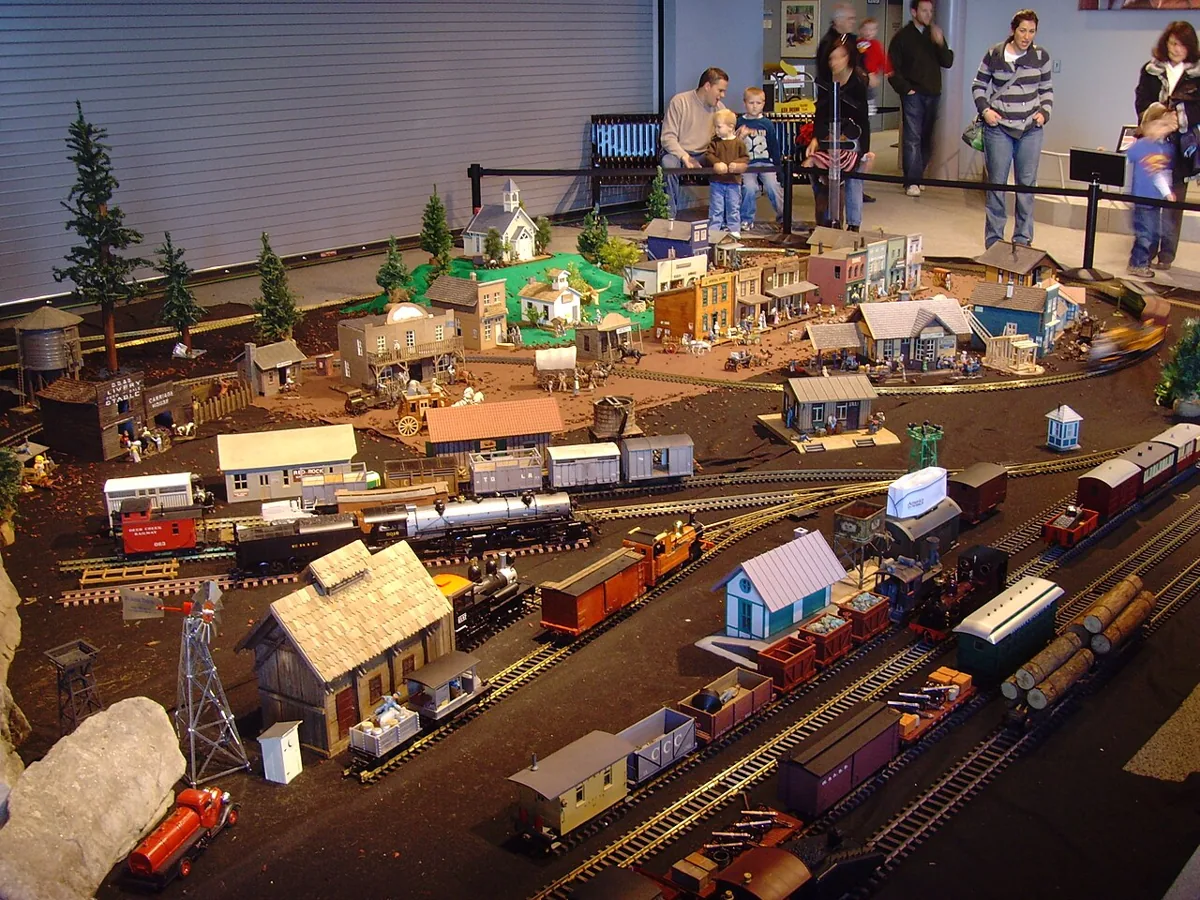
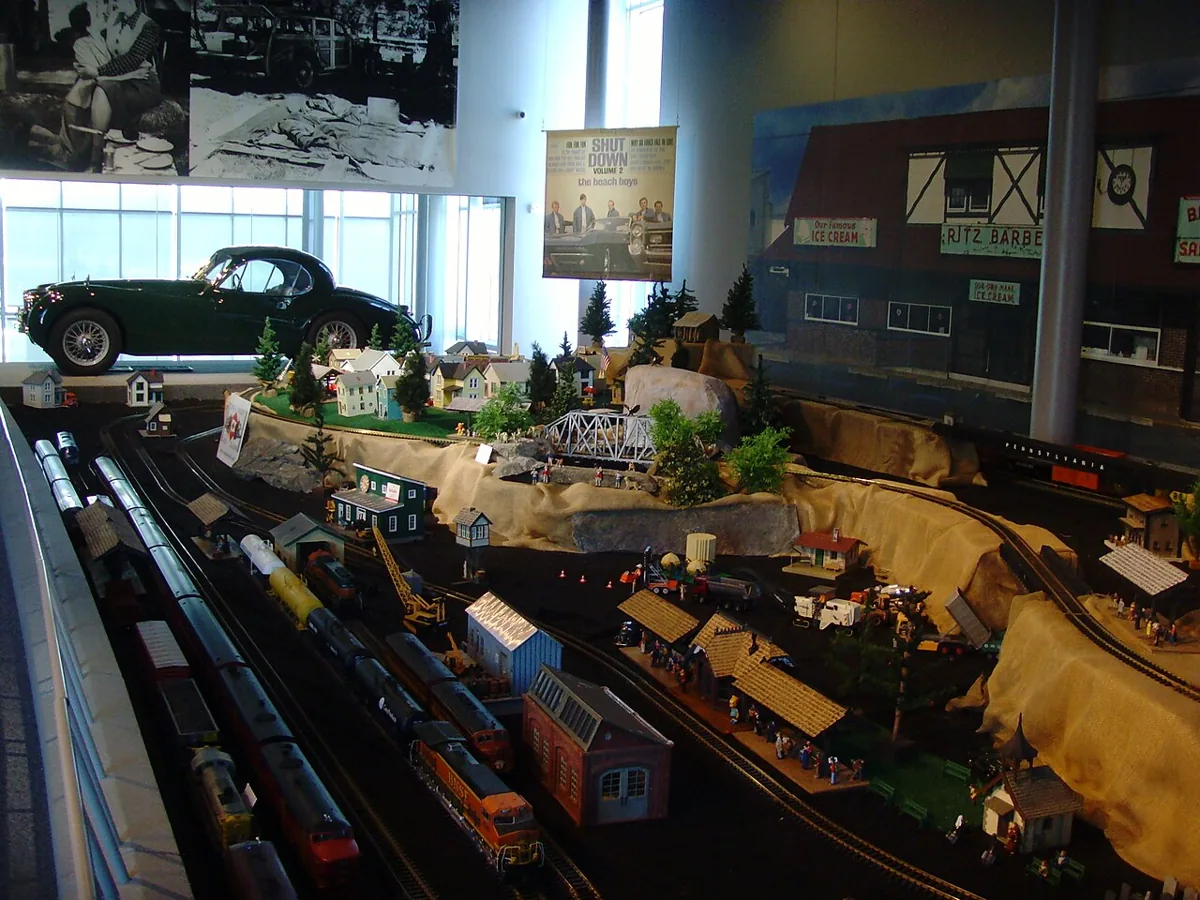
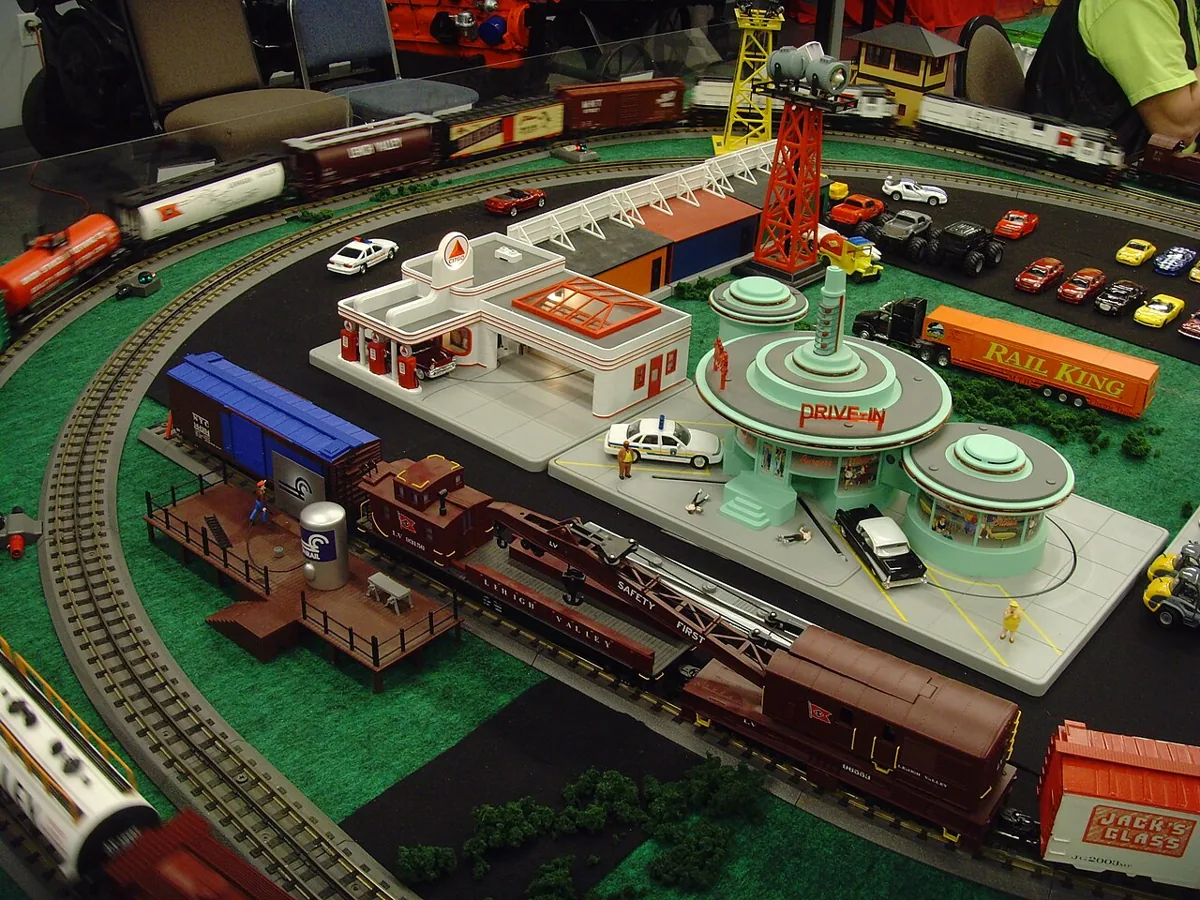
Visit a model railway exhibition with better questions
Learn from an exhibition without interrupting operators. A visit notebook organised around visible design choices.
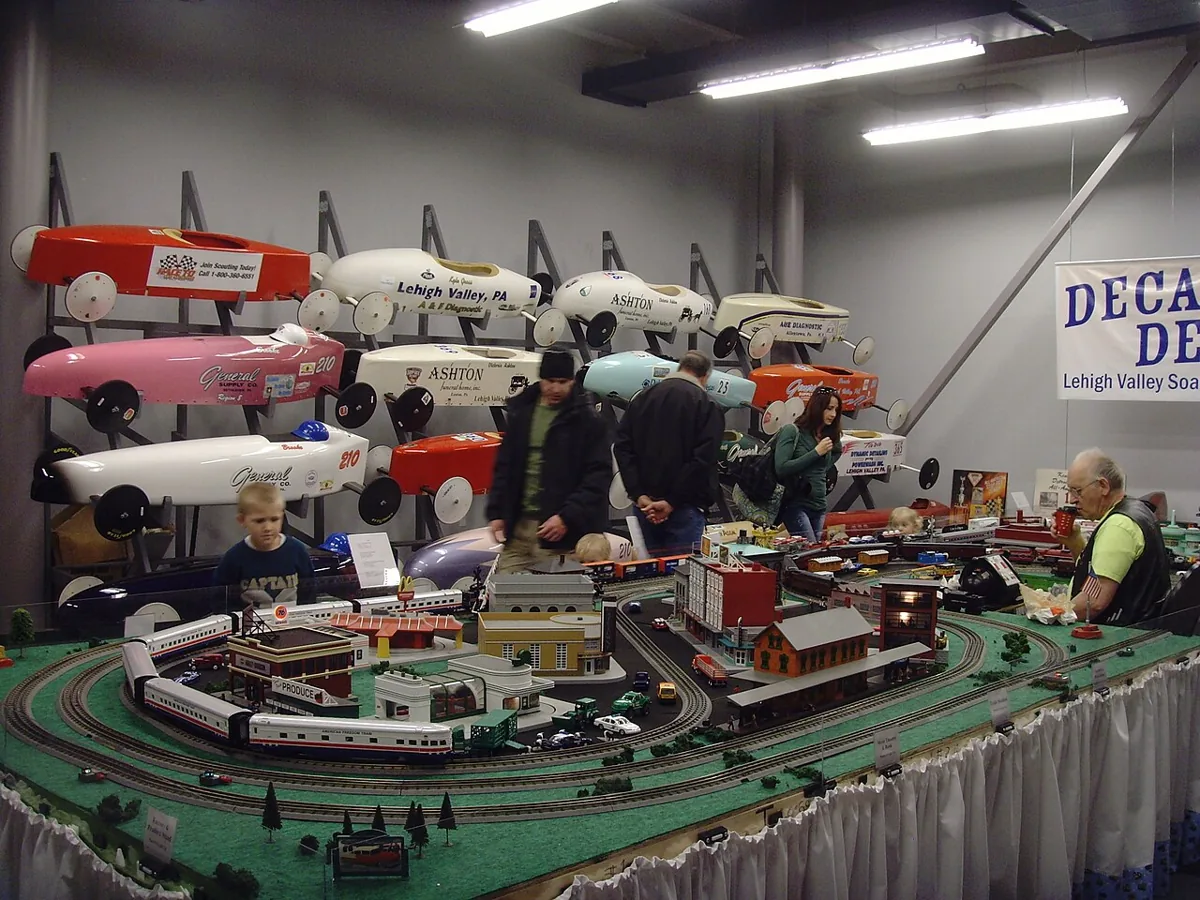
A model railway exhibition can offer more ideas than a notebook can hold. The difficulty is deciding what to notice beyond the most impressive scenery. A purposeful visit starts with a few questions linked to your own project, then leaves room for unexpected discoveries. You can learn from visible design choices without assuming access to the private working areas of every layout.
The NMRA's introduction recommends seeing models and learning from other hobbyists. Its module guidance suggests discussing systems at meets before building, while its operations guide explains why running a layout can require attention and coordination. The visit notebook here is a proposed way to learn respectfully; it does not claim any event's rules, facilities or current opening details.
Choose two learning questions
Before visiting, write two questions you hope the displays can help clarify. You might want to compare the appearance of scales, observe a compact station approach or understand how operators reach hidden track. Tie the questions to a decision rather than collecting a general list of desirable features.
Check the actual event's current information for access, timing and any relevant policies. This article does not establish that a particular exhibition offers demonstrations or permits photography. Keep logistical details separate from the modelling notebook so an outdated recollection does not become your plan for a future visit.
Observe a complete movement
Instead of judging only a stationary scene, watch one train through its visible journey. Note where it appears, what it does and where it leaves. Look at how the scene frames that movement. You may discover that a simple landscape serves the train more effectively than a denser arrangement.
Record what you actually observed and what remained hidden. A train disappearing behind a backdrop does not reveal the entire staging procedure. Do not infer automatic operation or a particular storage arrangement merely because the return movement looks smooth. A clear observation can lead to a focused question if an appropriate moment arises.
Notice the operator's work
Observe publicly visible controls, walking routes and handling points without entering restricted areas. Ask how the operator's position relates to the scene. A feature you admire may rely on rear access that your room cannot provide.
The NMRA operations material shows that a session can involve several roles and coordinated movements. Respect that concentration. If the operator is handling a train or resolving a problem, wait rather than demanding an immediate explanation. A short well-timed question is more likely to produce a useful answer than a long conversation competing with the work of the display.
Ask about a decision
Frame questions around the choice you can see: why a station occupies that part of the board, how a removable scenic section was planned, or which reference informed a visible feature. Avoid beginning with an assumption that the layout must use the method you already prefer.
Preserve the answer as attributed advice, not a universal rule. A builder's method can be successful in one material and context without applying to every project. If the answer includes a product or standard, record its exact name and investigate the relevant documentation later instead of relying on a hurried transcription of a number.
Take notes that survive the journey home
Give each display a clear identifier from the event information or an authorised name. Separate observations, answers and your own ideas. A brief sketch can record spatial relationships that a close photograph misses, provided you respect the setting and other visitors.
If photography is permitted, retain context as well as detail. Do not block viewing positions for a prolonged sequence or include people unnecessarily. Permission to take a personal reference photograph does not automatically establish the right to publish it elsewhere. Record the relevant source and permissions before using images in a public project.
Translate rather than copy
After the visit, select a small number of ideas and explain what each would do for your own railway. A long station throat may be visually exciting but unsuitable for the space or service you intend. Extract the useful principle, such as clear movement or a well-managed scenic boundary, rather than copying a distinctive arrangement without understanding it.
Keep unknowns beside each idea. You may need to research geometry, materials or actual interface requirements before applying it. A successful exhibition scene provides evidence that a particular arrangement exists; it does not prove that a superficially similar arrangement will work with your equipment and room.
End with one practical next step
Turn the visit into a modest action: a paper comparison, a revised access drawing or a request for the correct module document. Keep the rest of the inspiration list for later instead of allowing one enthusiastic day to replace the whole project brief.
A useful exhibition visit leaves you with better questions as well as attractive memories. The notebook earns its place when it connects what you observed with a specific decision, preserves the limits of that observation and respects the people making the miniature railway work for everyone watching.
Take it to the workbench
A field sheet for this article. Use your browser’s print command or copy the headings into your project notebook. Keep facts, observations and open questions distinct.
| Two learning questions | Your notes |
|---|---|
| Display identity | Your notes |
| Complete movement observed | Your notes |
| Attributed answer | Your notes |
| One next project action | Your notes |
Translate one observation
Hypothetical worked example. The visitor sees a train disappear and return, but never sees the storage area. Record smooth visible movement, not automatic staging. Ask about the hidden procedure at a suitable moment and verify any technical advice before applying it at home.
This is an editorial exercise, not a report of a physical test.
Sources & further reading
- National Model Railroad Association — Introduction to Layout Modules
- National Model Railroad Association — Operations
- National Model Railroad Association — Getting Started
Sources support the factual background. Worksheets and hypothetical exercises are editorial proposals, not reports of tests performed by this publication. Consult the relevant current product documentation before applying product-specific advice.