Build a useful first stage, not half a whole railway
Phase a layout so each stage can be used. A dependency map and stop points with observable completion criteria.
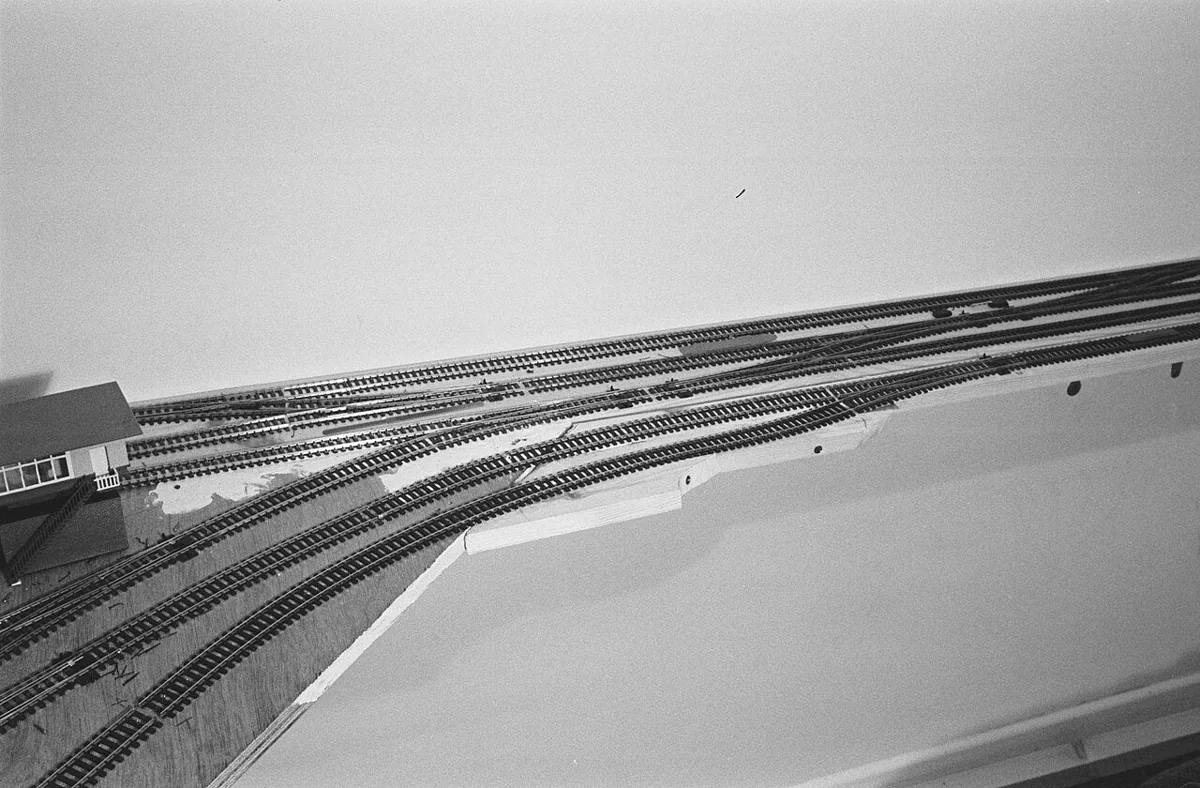
A layout can look busy for months without becoming usable. Track ends at unfinished board joints, buildings wait for scenery, and scenic work waits for decisions about hidden track. The problem is not necessarily a lack of effort. It may be that the project has been divided into trades rather than into stages that produce a meaningful result.
The NMRA's planning guide describes iterative design and staged approaches, while its benchwork and track guides identify decisions that affect later work. A dependency map turns those relationships into a practical construction sequence. The aim is a first stage that can be used and assessed, rather than a large area in which everything is partly started.
Define a usable stage
Describe what the first completed stage allows you to do. It might support a short train movement, a small switching task or a finished scenic study beside a working track. The description should identify an activity with a clear beginning and end. “Finish half the railway” does not provide that clarity.
Keep the first activity aligned with the eventual brief. If the whole project centres on a station scene, an unrelated elaborate yard may consume effort without answering the important questions. Conversely, a simple temporary arrangement can be worthwhile when it lets you learn about the exact vehicles and track system intended for the final plan.
Draw dependencies instead of dates
List the tasks needed for that activity and connect each task to the decisions it depends on. A structure's final position may depend on track clearance. Scenic ground around it may depend on whether the building must remain removable. Track positioning may depend on the actual turnout dimensions rather than a rough sketch.
Use arrows to show those relationships. Do not confuse a dependency with a preference about the order you enjoy working. Painting a backdrop before nearby delicate scenery may prevent difficult access later; building a favourite structure first may simply be motivating. Both can influence the sequence, but they should be labelled differently.
Find the expensive reversals
Highlight tasks that become difficult to undo after another task is finished. Enclosing hidden track, fixing a platform beside untested geometry and placing scenery over an inaccessible connection are examples worth examining. The NMRA's practical guidance repeatedly connects reliable construction with careful preparation.
For each highlighted task, define the evidence needed before proceeding. That might be an actual clearance check, a successfully completed movement with the intended equipment or a documented access procedure. Avoid a vague sign-off such as “looks fine.” The evidence should match the reason reversal would be costly, and should not claim to prove performance beyond what was observed.
Make temporary work explicit
Temporary track, scenic mock-ups and provisional storage can keep a project useful while it develops. Their value depends on everyone knowing what is temporary and how it will be removed. Label provisional components and record the boundary between an established arrangement and an unresolved design experiment.
Consider a fictional station stage with a simple off-scene holding track. That arrangement may support the intended passenger movement before the final staging area is built. The project record should explain how the holding track meets the current need, what it cannot do and which later connection replaces it. Otherwise a useful temporary compromise can quietly become an unexplained permanent obstacle.
Stop at an observable milestone
Choose a small set of completion conditions for the stage. State the intended operation, the equipment involved and the relevant access tasks. Include documentation, not only visible construction. A stage that works only when its builder remembers an undocumented sequence is harder to assess or share.
Once those conditions are met, spend time using the stage before extending it. Record interruptions, awkward reaches and assumptions that turned out to be wrong. This is project learning, not a product review. Keep the observations tied to the actual setup and avoid turning one successful session into a claim that the whole future design has been verified.
Prepare the next connection
The boundary between stages deserves attention early. Reserve the physical route, relevant access and any necessary interface decisions before completing scenery around it. A finished scene should not force the next stage into a geometry that was never assessed.
At the same time, avoid installing speculative complexity merely because future expansion is imaginable. Record the intended connection and its limits, then build only the provisions justified by the current plan. The distinction keeps the first stage achievable while preserving a coherent route forward. It also makes later changes easier to explain to someone joining the project.
Keep a stage log
For each stage, retain its purpose, dependencies, unresolved evidence, temporary arrangements and completion observations. Add photographs before concealed areas are closed. Date decisions so a later revision does not erase the reasoning that supported earlier work.
The next stage should begin from what the completed one taught you. If the first session reveals that train handling matters more than a second scenic scene, revise the plan before spreading the same weakness across more boards. A phased layout is useful when each stopping point stands on its own and makes the next decision better informed. Progress then means gaining a working railway, rather than simply increasing the area covered by unfinished tasks.
Take it to the workbench
A field sheet for this article. Use your browser’s print command or copy the headings into your project notebook. Keep facts, observations and open questions distinct.
| Usable first-stage activity | Your notes |
|---|---|
| Preceding decisions | Your notes |
| Expensive reversals | Your notes |
| Temporary arrangements | Your notes |
| Observable completion conditions | Your notes |
A useful hold point
Hypothetical worked example. Stage one can run the chosen passenger movement using a temporary holding track. The bridge scenery depends on an unresolved hidden-track recovery route. Leave that scenery unfinished while using the completed movement; document the temporary arrangement instead of calling the whole railway complete.
This is an editorial exercise, not a report of a physical test.
Sources & further reading
- National Model Railroad Association — Layout Planning
- National Model Railroad Association — Building Benchwork
- National Model Railroad Association — Laying Track
Sources support the factual background. Worksheets and hypothetical exercises are editorial proposals, not reports of tests performed by this publication. Consult the relevant current product documentation before applying product-specific advice.