The track you cannot reach is part of the design
Locate maintenance access before adding scenery. An intervention map covering cleaning, rerailing and removal.
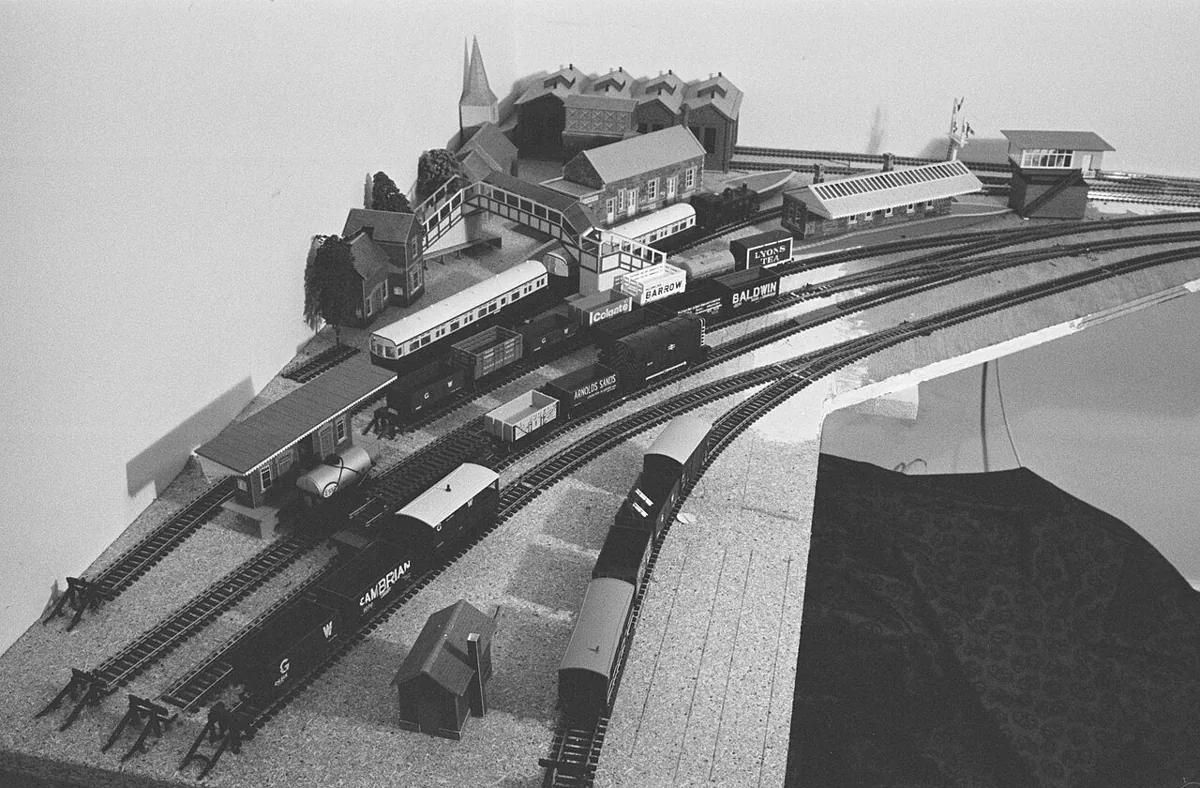
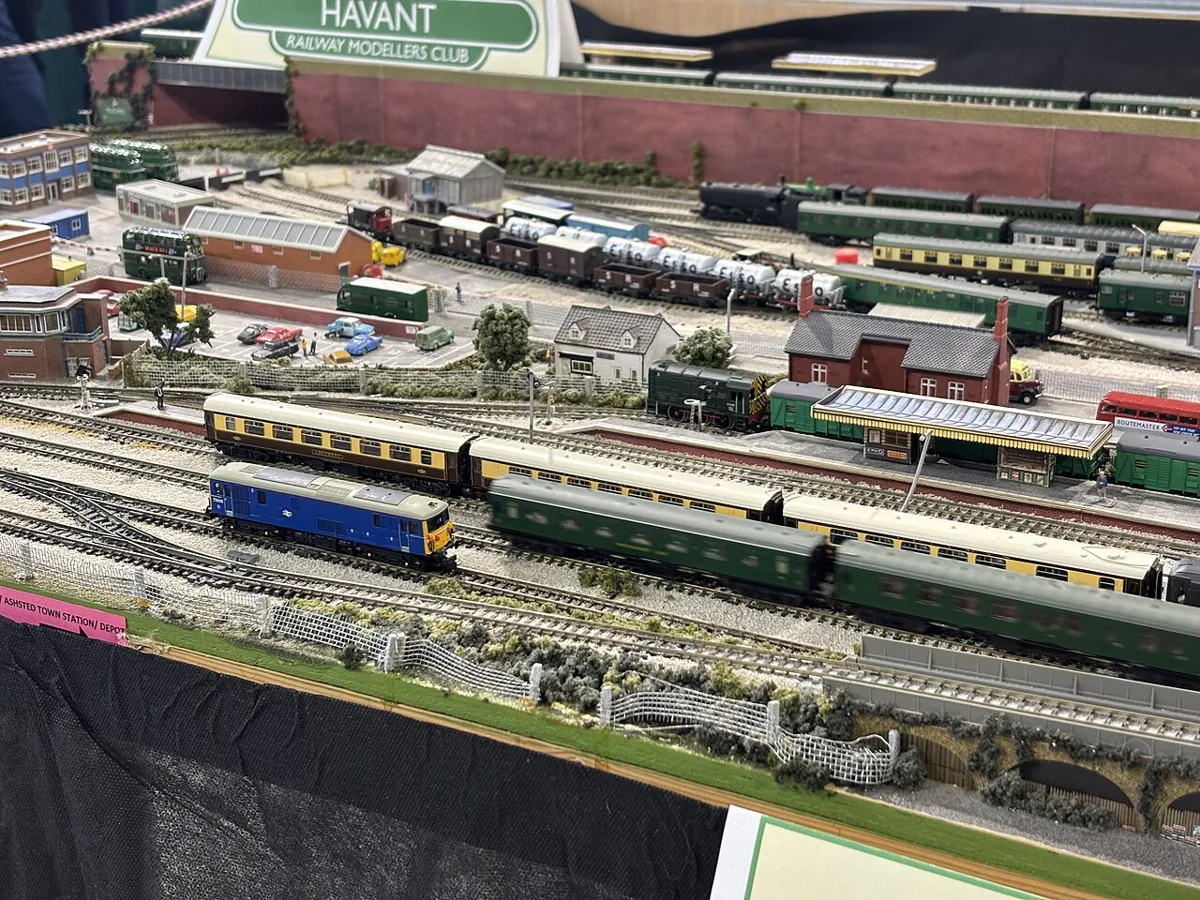
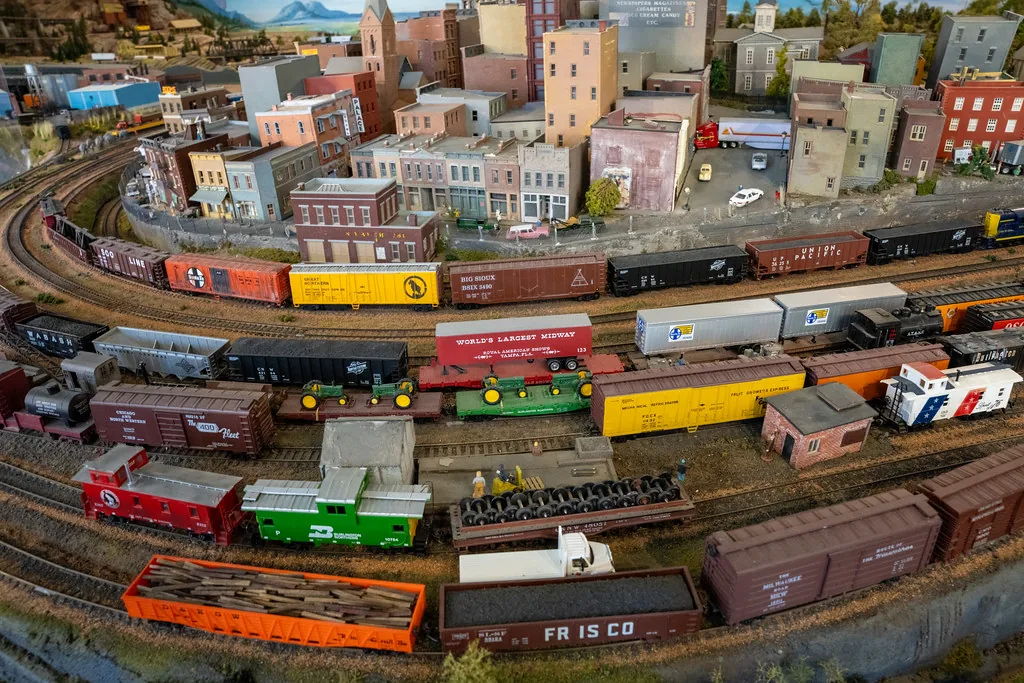
Access is easiest to ignore when a layout is empty. Every track looks reachable before buildings, trees, backdrops and other trains occupy the space around it. A better question is not whether a hand can touch the far rail today, but whether the required task can still be performed when the scene is finished and something has gone wrong.
The NMRA's planning guide explicitly calls for maintenance access and discusses openings or removable scenery for difficult locations. Its benchwork and track guides show why the underside and the rail surface both need attention. An intervention map brings these requirements together before scenery makes the route to a problem obscure.
Identify interventions by name
List the actions the railway will need: inspecting track joints, cleaning the rail surface, placing vehicles back on the rails, reaching a coupling, removing a building and accessing a mechanism beneath the board. Write these separately. A location reachable with a cloth may still be awkward for handling a long coach.
On a plan, give each likely intervention point a small code. Use one code for a turnout beneath the station roof and another for the mechanism below it. The two points occupy similar horizontal positions but require different approaches. This prevents an access hatch above the track from being treated as the solution to every task at that location.
Draw the route of the person
For each point, mark the operator's standing or seated position and the direction in which hands or tools approach. Include neighbouring scenery, other tracks and anything that obstructs the view. If the task requires seeing both sides of a vehicle, check that the position permits that observation.
Avoid adopting another modeller's reach distance as your own design limit. People, postures and tasks differ. Explore proposed arrangements with a stable, harmless mock-up and representative objects before building to the edge of comfort. An awkward trial is useful evidence that the plan needs revision; it is not a challenge to solve by leaning farther over the finished layout.
Include the failed state
Access planning should assume that the easiest operating condition may not be available. A derailed car can lie beyond its normal footprint. A stationary train may occupy the neighbouring track. A removable cover may be harder to lift when an object stands beside it.
Choose one plausible failure at each critical point and describe the recovery. For example, a vehicle stops behind a low scenic ridge while an adjacent storage track remains occupied. Can it be seen, reached and removed without handling the other train? If not, decide whether the procedure can tolerate clearing that track or whether the physical arrangement needs to change.
Give removable scenery somewhere to go
A lift-out section solves only part of an access problem. It needs a secure lifting method appropriate to its construction, an unobstructed movement path and a resting place while work continues. Its edges should be understandable to the person performing the task, especially if someone other than the builder may help.
Mark the resting location on the room plan. Record which loose objects must be removed first and how the section returns to position. Keep structural design and material suitability tied to the actual build rather than assuming a scenic shell is strong enough to be handled because it looks rigid. The record should describe an established procedure, not conceal an untested assumption.
Check below the surface
Benchwork members, storage boxes and wiring can turn a nominally open underside into a crowded space. Before fixing track or mechanisms, compare their positions with cross members and other obstructions. The NMRA's benchwork discussion notes that different structural approaches offer different opportunities for later adjustment.
Photograph and label the relevant underside locations when they are accessible. Provide lighting appropriate to the task and avoid planning maintenance that depends on improvised body positions. Electrical and structural work needs suitable expertise and documentation; an access map merely makes the physical requirements visible and does not qualify an unsafe working arrangement.
Recheck after each scenic addition
Use a simple sign-off record with intervention code, required action, approach, temporary removals and unresolved issue. Review it after adding major scenery or storage. A new tree may be harmless visually but obstruct a frequently used coupling position. A new cabinet may remove the only route to the rear of the layout.
Retain failed checks instead of replacing them with a clean drawing. They explain why a feature moved and help prevent the same obstruction returning later. A well-designed railway allows ordinary care without sacrificing scenery every time attention is needed. Its finished appearance and its maintainability should support each other, rather than being treated as competing projects.
Store the access map with the layout documentation, including photographs showing removable sections in position and removed. Another caretaker should be able to identify the intended opening without exploratory dismantling of finished scenery.
Take it to the workbench
A field sheet for this article. Use your browser’s print command or copy the headings into your project notebook. Keep facts, observations and open questions distinct.
| Intervention location | Your notes |
|---|---|
| Required task | Your notes |
| Operator approach | Your notes |
| Scenery to remove | Your notes |
| Recovery under failed conditions | Your notes |
A recovery that fails
Hypothetical worked example. The fictional access map allows cleaning behind a ridge, but the same opening cannot lift out a derailed coach while the next track is occupied. Mark cleaning as feasible and recovery as unresolved. Enlarging the scenic opening is a separate design decision requiring a new mock-up.
This is an editorial exercise, not a report of a physical test.
Sources & further reading
- National Model Railroad Association — Layout Planning
- National Model Railroad Association — Building Benchwork
- National Model Railroad Association — Laying Track
Sources support the factual background. Worksheets and hypothetical exercises are editorial proposals, not reports of tests performed by this publication. Consult the relevant current product documentation before applying product-specific advice.