Where the model ends and the distance begins
Manage transitions between three dimensions and backdrop. A sightline study for joins, roads and distant features.
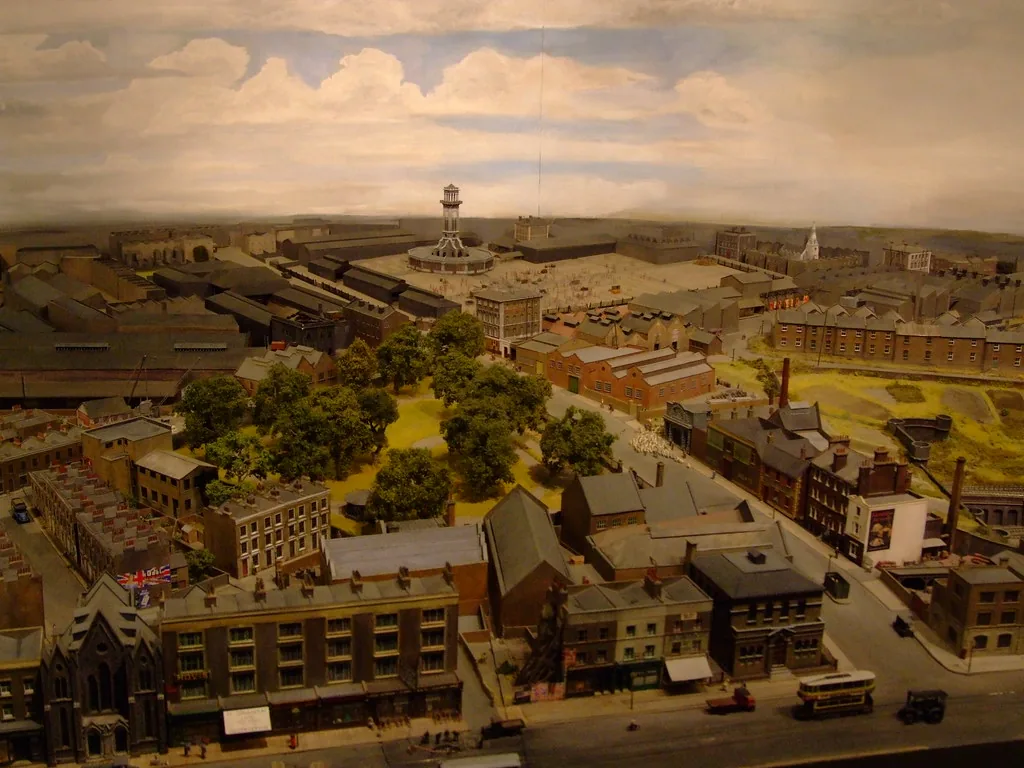
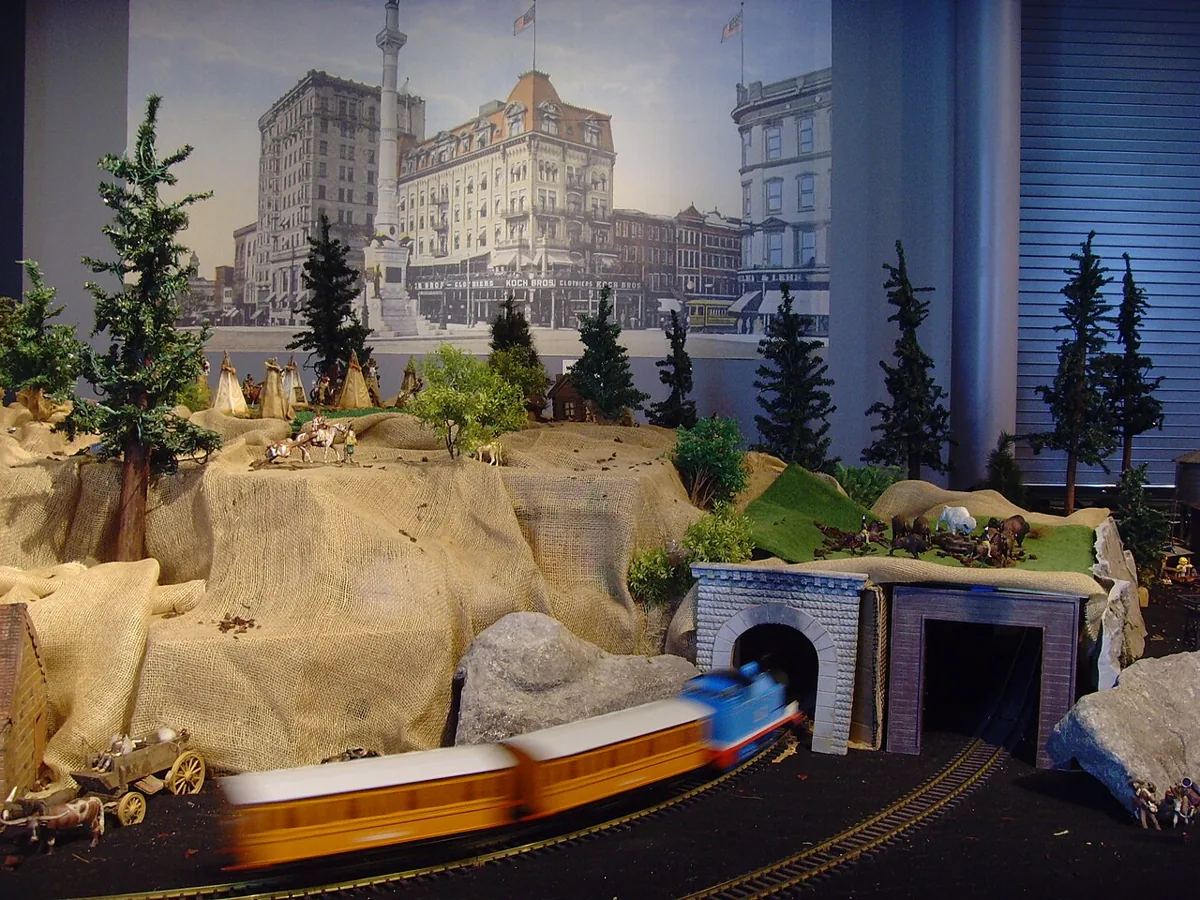
A backdrop promises distance while the model in front of it occupies physical space. The join between them becomes noticeable when a road seems to hit a wall, a building casts an awkward shadow or a foreground tree appears larger than its painted surroundings. Planning the transition as a viewing problem can make the boundary quieter without pretending it has disappeared from every angle.
The NMRA scenery guide places landform and surface treatment within the scenic whole. Its benchwork guide discusses backdrop materials, while planning and structures guidance provides background for views, placement and mock-ups. The sightline study here focuses on the relationship between dimensional scenery and a flat surface. It is a composition method, not a claim that a particular painting technique guarantees perspective.
Define the intended viewing range
Mark the normal viewing positions and approximate eye levels. A scene designed for a clear front view can use different compromises from one approached on several sides. Decide which views matter to the actual display rather than trying to optimise an imaginary perfect photograph.
Look at where the backdrop meets the visible base from those positions. Note shadows, reflections and objects that interrupt the join. A transition concealed when standing can become obvious from a seated position. Record those observations before selecting a method so the choice responds to the real viewing conditions.
Keep the distant scene related
Choose a background that supports the place and season suggested by the model. If depicting a named location, use appropriate reference evidence. If creating a fictional setting, preserve a coherent visual relationship without inventing a precise geographical identity.
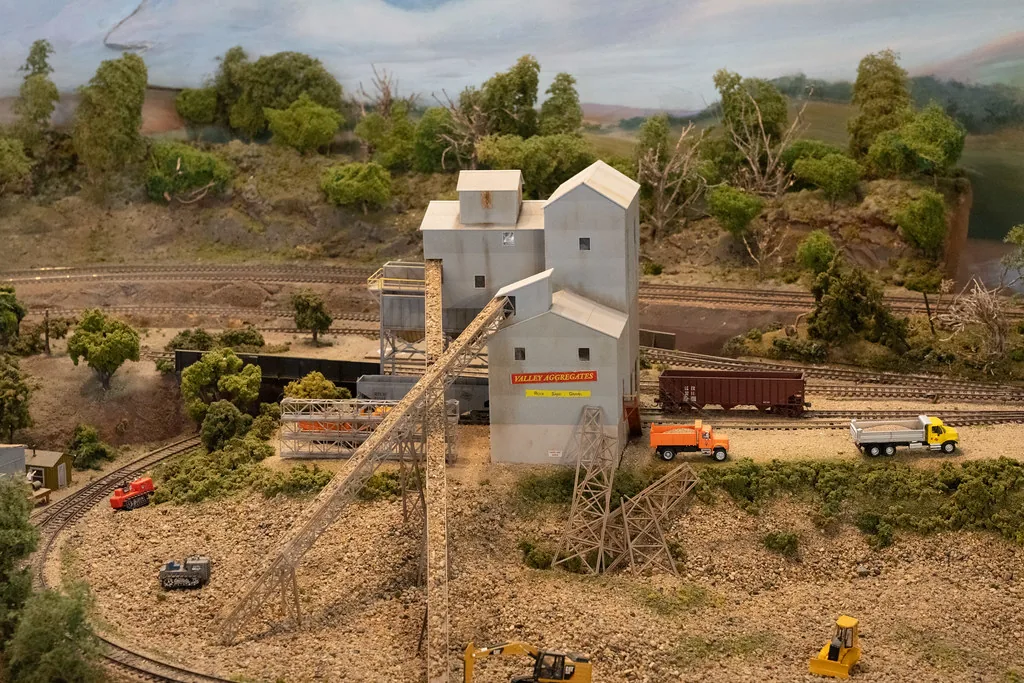
Compare the scale cues that viewers use: roofs, doors, trees and horizon relationships. An impressive image can still disagree with the foreground. Do not assume a purchased backdrop is suitable simply because it depicts railway scenery. Its composition, lighting and implied viewing position need to be assessed beside the scene in which it will be used.
Study one difficult continuation
Select a road, trackside area or landscape feature that approaches the flat surface. Make a simple mock-up showing its intended continuation. Move through the defined viewing range and record where the illusion weakens. Use this evidence to decide whether the feature should continue visibly, turn away or pass behind another element.
Avoid solving every awkward join with the same dense screen. A building or tree group can conceal a boundary while creating another problem, such as blocked operator access or an implausible route. The chosen transition should support the scene's activity and remain practical, not merely cover the exact line visible in one photograph.
Compare layers with restraint
Try a small number of dimensional layers between the main scene and backdrop. A low form, a building mass or a group of vegetation may provide enough separation. Additional layers can create more shadows and visual conflicts instead of greater depth.
Photograph alternatives under comparable lighting and viewing conditions. Describe which relationship improves and which remains unresolved. These are observations about a specific arrangement. Do not turn one successful view into a universal instruction about spacing, colour or perspective. Another layout with different lighting or viewing positions can require a different solution.
Consider light at the boundary
Inspect how the intended lighting falls on both the model and backdrop. A projecting object may cast a conspicuous shadow onto the distant image. A glossy surface may reflect the room and undermine the implied distance. Record the effect as seen rather than relying only on material descriptions.
Any changes to lighting equipment or electrical arrangements require suitable product guidance and safe installation. The sightline exercise merely identifies a visual issue. It does not prescribe fittings, wiring or heat clearances. Recheck the transition after a lighting change because the same scenic arrangement can read very differently under a new source.
Preserve construction and maintenance access
Backdrops and transition scenery can obstruct work at the rear of the layout. Identify the tasks that remain necessary and compare them with the proposed layers. A removable element needs an understandable join, lifting route and resting place.
Follow appropriate material instructions when constructing or finishing a backdrop. The NMRA benchwork discussion notes several possible materials, but their suitability depends on the actual arrangement. Keep the visual plan separate from structural assumptions. A flat surface that looks satisfactory in a temporary mock-up still needs a suitable supported installation before it becomes part of the finished railway.
Document the chosen compromise
Keep the view map, selected arrangement and photographs of problem angles. Explain which views the scene serves and where the transition remains apparent. That is a useful design record, not an admission that the whole scene has failed.
Review the boundary when buildings or trees move. A new object can expose an old join or introduce a shadow that was absent before. The best transition is often a quiet sequence of compatible relationships. It allows the model to suggest a wider world while remaining honest about the physical limits and viewing conditions through which that suggestion works.
Take it to the workbench
A field sheet for this article. Use your browser’s print command or copy the headings into your project notebook. Keep facts, observations and open questions distinct.
| Intended view positions | Your notes |
|---|---|
| Distant scene source | Your notes |
| Difficult continuation | Your notes |
| Layer and shadow observations | Your notes |
| Accessible removal boundary | Your notes |
Choose the viewing compromise
Hypothetical worked example. The road continuation works standing at the front but reveals the painted join from a seated side view. Record that limitation. Compare a changed road angle before adding another screen that could obstruct maintenance behind the scenery.
This is an editorial exercise, not a report of a physical test.
Sources & further reading
- National Model Railroad Association — Scenery
- National Model Railroad Association — Layout Planning
- National Model Railroad Association — Structures
- National Model Railroad Association — Building Benchwork
Sources support the factual background. Worksheets and hypothetical exercises are editorial proposals, not reports of tests performed by this publication. Consult the relevant current product documentation before applying product-specific advice.