Give a small scene one clear subject
Compose a compact diorama without clutter. A three-view composition exercise using a focal point.
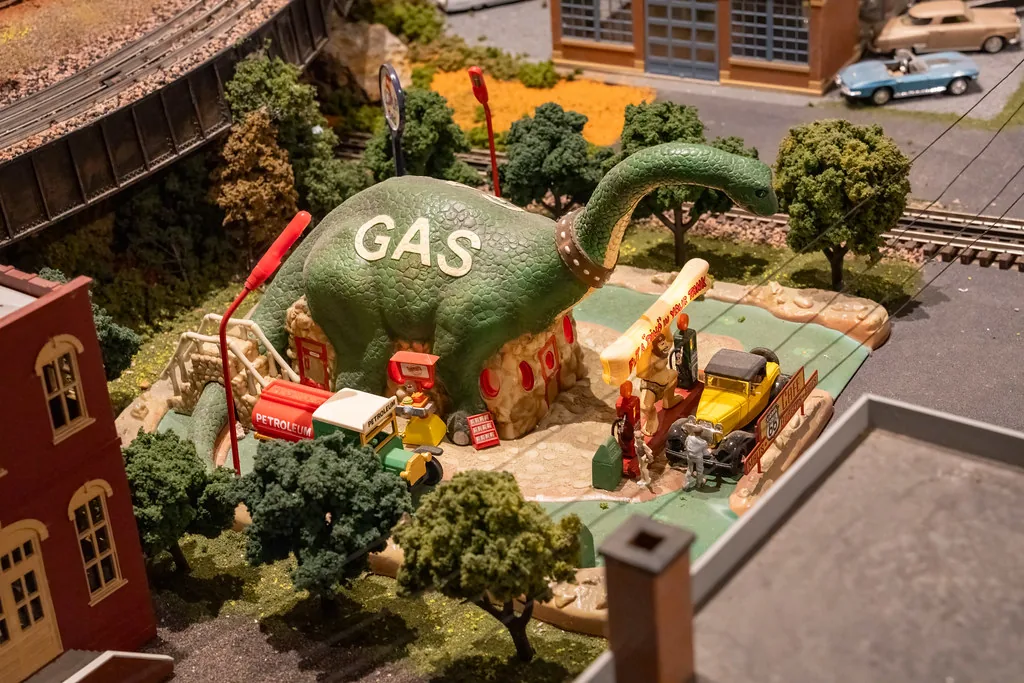
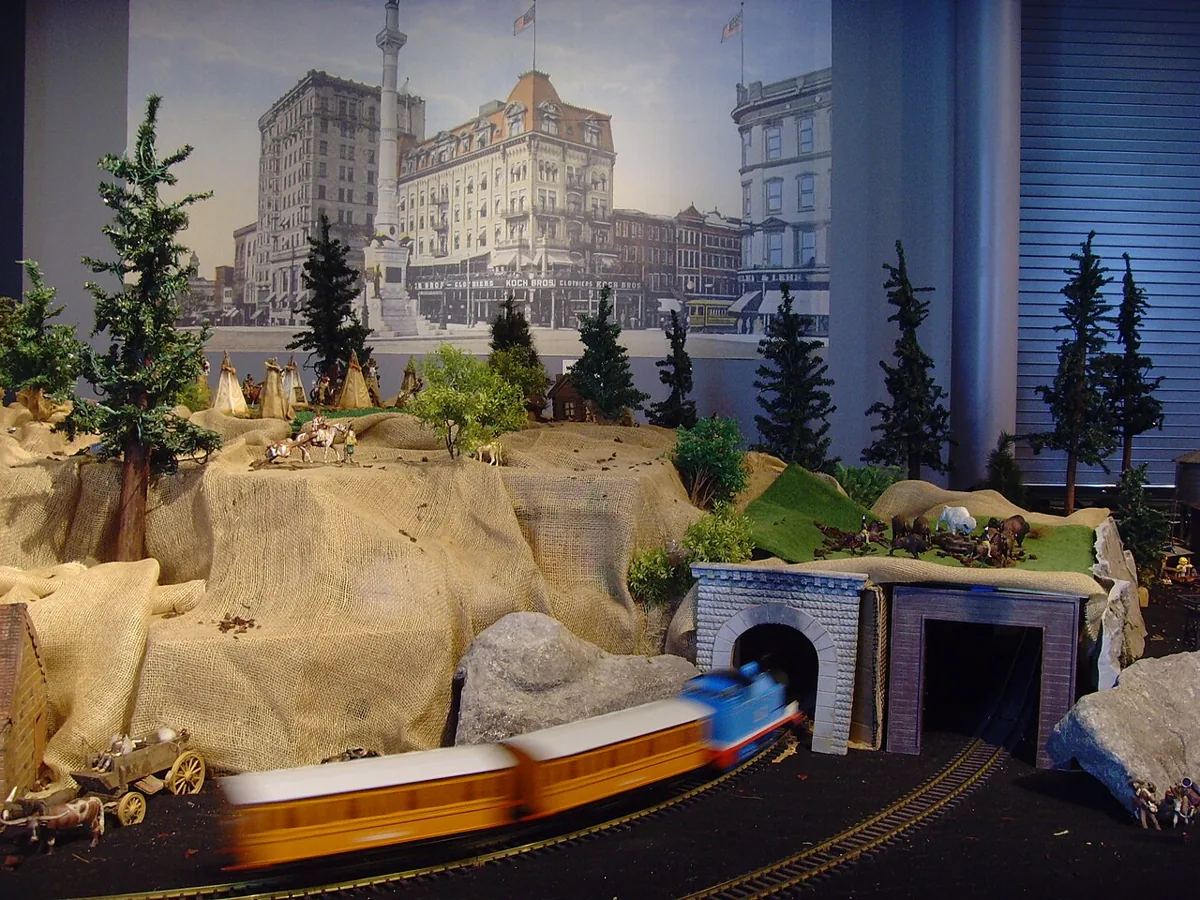
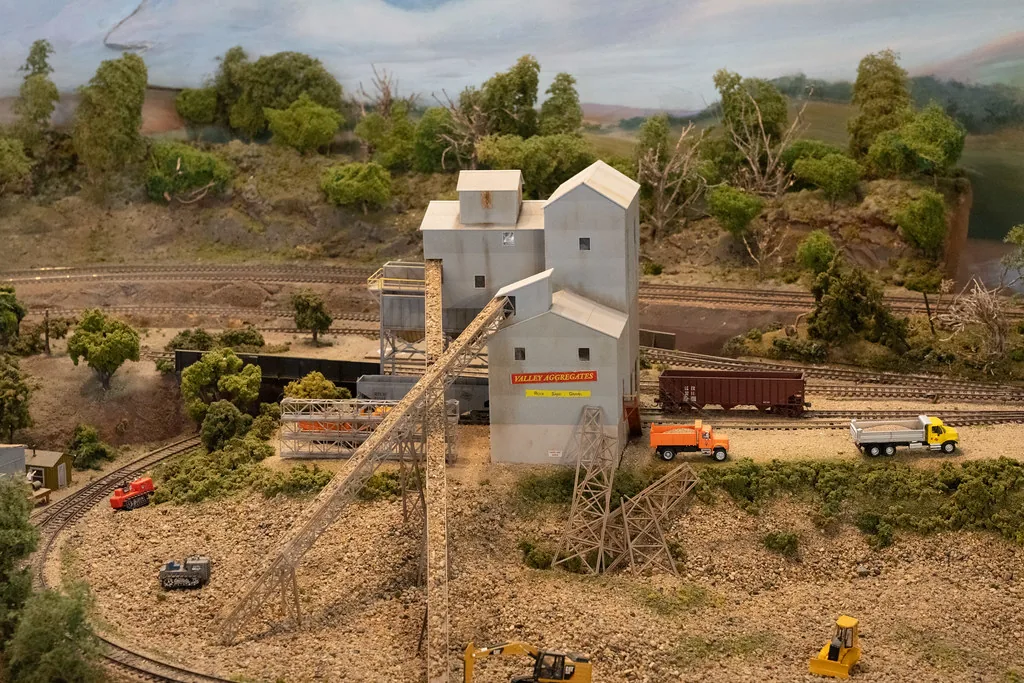
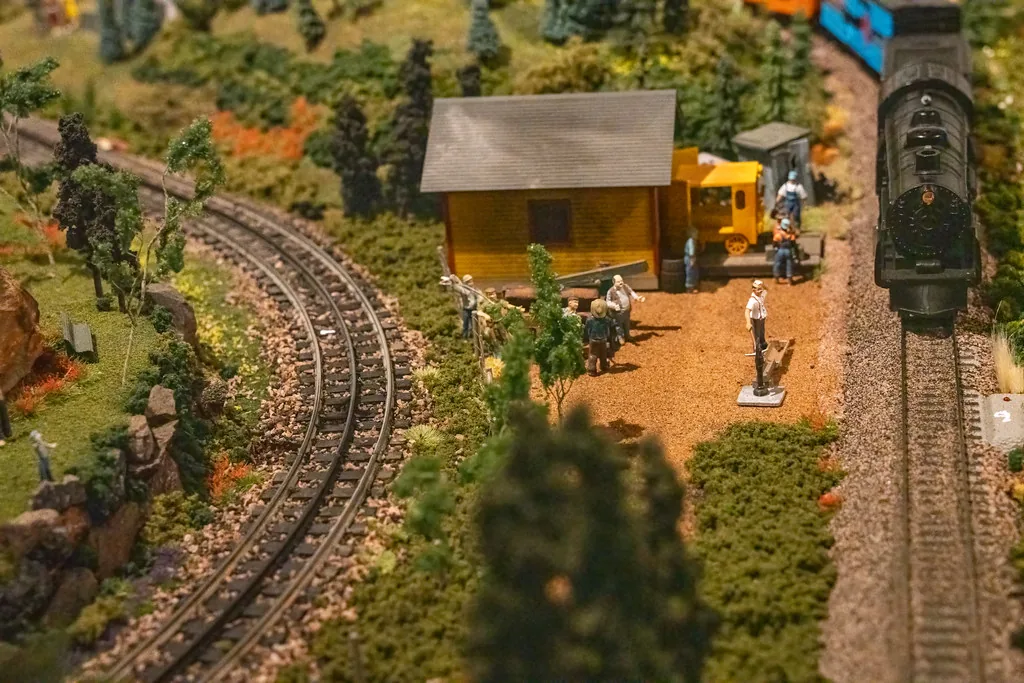
A compact diorama can feel rich without containing many objects. Its strength often comes from one clear relationship: a train beside a platform, a building meeting the railway or a stretch of track emerging from a landscape. Choosing that relationship first gives every additional feature a purpose and makes the limited space easier to compose.
The NMRA scenery guide treats scenic work as an artistic activity informed by technique. Its structures and planning guides discuss mock-ups as ways to examine a proposed arrangement. The three-view exercise below uses temporary forms to compare composition before detailed models or permanent materials make a poor arrangement costly to change.
Name the subject in one sentence
Write what a viewer should notice first and why it matters. “A short train waiting beside a modest station building” describes a relationship. “A railway scene with everything I like” does not identify a subject. Keep secondary ideas on a separate list rather than squeezing them into the first sketch.
The subject can be quiet. A stretch of open track passing a tree group can be enough if the proportions and setting hold attention. Do not confuse a modest story with incomplete work. The point is to decide what the scene communicates, so that later detail supports the same intention rather than competing for attention.
Make three simple versions
Use the same basic ingredients for three small arrangements. Change their position, orientation or spacing rather than introducing a different collection of objects each time. Card blocks can stand in for buildings, and paper outlines can reserve the track and other fixed requirements.
Label each arrangement and photograph it from the intended front view. Keep dimensions and viewing conditions comparable so the differences can be judged. This is not a contest for the most elaborate mock-up. It is a way to expose choices that are difficult to recognise when only one arrangement has been placed on the board.
Read the first view
Look at each version without explaining it aloud. Ask where attention lands, whether the main relationship is visible and what obstructs it. A large roof, bright accessory or dense tree group may become the subject unintentionally. Record that observation before deciding whether it is a problem.
Sometimes the unexpected focal point suggests a better scene. If so, revise the stated subject honestly. Otherwise adjust the competing feature or leave it out. Do not add more detail around the intended subject merely to overcome a composition in which a stronger object occupies the most prominent position.
Check two additional viewpoints
Move to the other likely viewing positions, including the approximate height of a seated or standing viewer where relevant. A compact scene may look coherent from one narrow angle while exposing awkward gaps or hiding the railway from another. Decide which views the actual display needs to serve.
You do not have to make every possible viewpoint equally successful. A scene designed for a defined front can have a quieter service side. What matters is knowing the intended viewing range and avoiding a presentation that promises access from all sides while relying on one carefully selected photograph to make sense.
Give the space between objects a role
Look at the gaps as carefully as the models. A small yard, a verge or an open foreground can connect features and establish their relative size. Filling every gap with an accessory may remove the very separation that made the subject legible.
On the chosen mock-up, mark the places that should remain visually quiet. Give each a reason, such as separating the train from the backdrop or making a building entrance understandable. This makes restraint part of the plan. It also gives you a practical answer when a new accessory seems attractive but has no clear relationship with the scene.
Test physical tasks separately
If the scene includes working track, assess relevant clearance, handling and maintenance needs. A building that frames the train beautifully can still block an uncoupling point. A tree group can hide a track end that needs inspection. Visual success does not establish operating suitability.
Keep fixed geometry and access zones visible on the mock-up. Use the actual equipment requirements and appropriate guidance before committing to permanent work. The NMRA planning material connects aesthetics with workable arrangements; a scenic composition should support the railway's use rather than depend on the operator avoiding inconvenient places.
Carry forward a concise composition note
Record the selected arrangement, main subject, intended views, quiet areas and important access provisions. Retain photographs of the alternatives with a short explanation of why they were declined. That evidence is more useful than remembering the final arrangement as the only possible one.
As surface detail develops, compare it with the note. Add an object when it clarifies place or activity, and leave it aside when it only increases density. A successful small scene does not need to explain an entire railway. It needs a clear subject, coherent relationships and enough room for the viewer to understand what the modeller chose to show.
Take it to the workbench
A field sheet for this article. Use your browser’s print command or copy the headings into your project notebook. Keep facts, observations and open questions distinct.
| One scene subject | Your notes |
|---|---|
| Three temporary arrangements | Your notes |
| Intended view range | Your notes |
| Quiet areas to preserve | Your notes |
| Operational constraints | Your notes |
Read three versions
Hypothetical worked example. Version A hides the station entrance, B makes the tree the main subject, and C leaves the waiting train clear. If the train is the stated subject, C is the candidate to develop. This is a hypothetical comparison, not a photographed trial result.
This is an editorial exercise, not a report of a physical test.
Sources & further reading
- National Model Railroad Association — Scenery
- National Model Railroad Association — Structures
- National Model Railroad Association — Layout Planning
Sources support the factual background. Worksheets and hypothetical exercises are editorial proposals, not reports of tests performed by this publication. Consult the relevant current product documentation before applying product-specific advice.