A coupling is part of the operating plan
Evaluate coupling choices for the required movements. A coupling comparison organised around operating tasks.
A coupling is easy to regard as a small detail until the whole operating session depends on it. A train that remains assembled asks something different from a freight car exchanged at every destination. Choosing or adapting couplings therefore begins with movements and access, not simply with the most realistic-looking shape in a catalogue.
The NMRA rolling-stock guide discusses coupling arrangements and height checks, while its operations guide emphasises smooth coupling and uncoupling as part of an enjoyable session. Its technical index provides the standards context. Use these references to frame a task-based comparison, then consult the exact current product documentation before selecting parts or making alterations.
Write the coupling jobs
List the actions required during an ordinary session. Include connecting the train before use, separating individual vehicles at destinations and packing the equipment afterwards. Note whether each action is expected to be automatic, performed manually or avoided during the session.
For a fixed passenger formation, a reliable connection left intact may matter more than repeated individual uncoupling. For a small freight operation, access to several separation points may be central to the experience. Neither task determines a universal coupling choice. It tells you which behaviour the comparison must investigate and which catalogue features may be less important to this project.
Identify the actual mounting arrangement
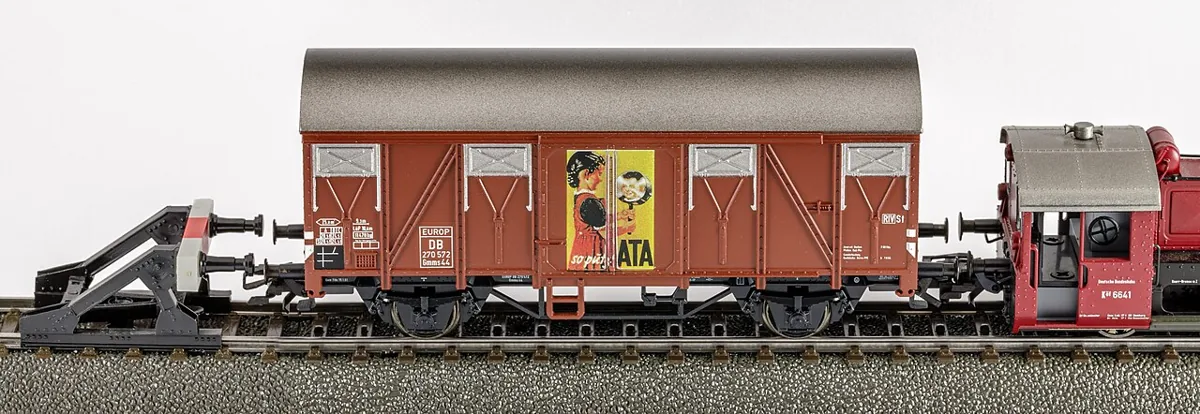
Record the installed coupling, its mounting and the model reference. A similar visible head does not necessarily establish identical mounting, height or side movement. Some arrangements are associated with the body and others with the running gear, with consequences that depend on the product and geometry.
Do not assume that replacing the head alone reproduces the intended system. Consult the relevant instructions for the exact model. Where the mounting arrangement is unclear, leave it as an unresolved field. The comparison should expose missing evidence before an irreversible change, rather than turn a familiar brand name into an all-purpose compatibility answer.
Map uncoupling locations
Mark every place on the track plan where a vehicle must be separated. Add the operator's position, sightline and approach. A coupling method that works comfortably on a clear workbench may be awkward behind a platform canopy or among delicate scenic details.
Decide which scenic elements can move, which locations can shift and which operations are optional. If a proposed method requires equipment embedded in the layout, identify its documentation and access needs before surrounding scenery is complete. This article does not recommend electrical installation or any specific mechanism; it makes the physical and operating questions visible.
Compare behaviour on the intended route
Curves and direction changes affect the relationship between coupled vehicles. Record the geometry relevant to the proposed combination and check the product requirements. A connection that holds two stationary models together is not evidence that they can complete every movement on the layout.
Use an appropriate controlled trial where available, following the product guidance. Include the intended vehicle pair and movement direction. Record the scope precisely. A successful result for one pair does not certify an entire fleet, particularly where lengths, mounting arrangements or fitted parts differ. Keep observed behaviour separate from a manufacturer's stated capability.
Assess the maintenance burden
Ask how the arrangement is inspected, adjusted according to instructions and replaced if necessary. Record the relevant tool or gauge and the source explaining its use. The NMRA rolling-stock guide identifies coupling height as one possible operating issue, but that does not establish that every failure should be treated with the same adjustment.
Include handling in the comparison. Delicate parts may change how vehicles are lifted from storage or placed on track. A visually unobtrusive system can be appealing while imposing a procedure you do not enjoy repeating. The best comparison records that trade-off plainly instead of treating appearance as a substitute for ordinary usability.
Plan a limited conversion
If adapting a collection, consider a representative group before committing to every vehicle. Identify the actual parts, instructions and compatibility questions. Keep original components associated with their models where appropriate, and record the change in the collection documentation.
Do not claim a proposed conversion is reversible unless that has been established for the actual model and method. Avoid forcing a common solution onto versions with different mountings. A phased approach provides a chance to assess the task and its consequences before a large number of models acquire the same unresolved issue.
Choose against the session
Compare each candidate using task, location, mounting evidence, route behaviour, handling and maintenance. Keep unanswered fields visible. A choice can remain provisional until an actual product question is resolved; there is no benefit in manufacturing certainty merely to finish the worksheet.
The outcome should explain why the arrangement suits the railway's intended movements. That explanation remains useful when scenery, rolling stock or operating habits change. Couplings then become a documented part of the operating plan rather than a collection of small compromises discovered one frustrating uncoupling at a time.
Take it to the workbench
A field sheet for this article. Use your browser’s print command or copy the headings into your project notebook. Keep facts, observations and open questions distinct.
| Required coupling task | Your notes |
|---|---|
| Exact mounting arrangement | Your notes |
| Uncoupling location | Your notes |
| Route evidence | Your notes |
| Maintenance and handling burden | Your notes |
One route, two tasks
Hypothetical worked example. A fixed passenger set stays connected during the session, while a freight car separates at three locations. Compare the freight task at all three sites. A satisfactory stationary passenger connection cannot establish repeated uncoupling access behind a platform canopy.
This is an editorial exercise, not a report of a physical test.
Sources & further reading
- National Model Railroad Association — Motive Power & Rolling Stock
- National Model Railroad Association — Operations
- National Model Railroad Association — Standards and Recommended Practices
Sources support the factual background. Worksheets and hypothetical exercises are editorial proposals, not reports of tests performed by this publication. Consult the relevant current product documentation before applying product-specific advice.