Build a roster that has a job to do
Choose vehicles for an operating concept. A service-to-vehicle roster worksheet.
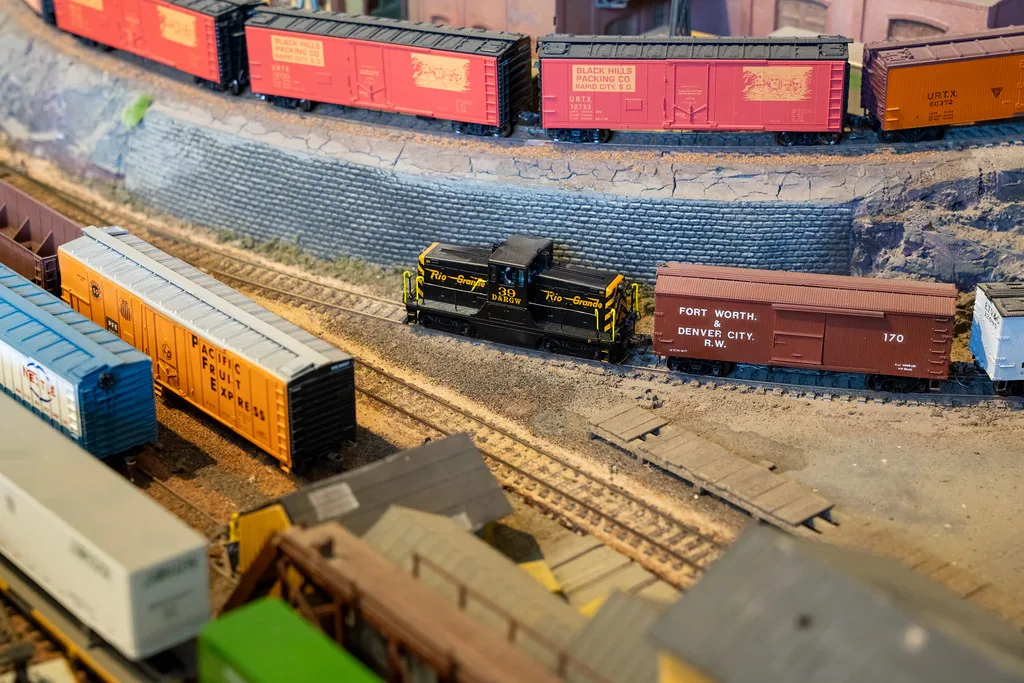
A collection can grow one attractive model at a time until the layout has more vehicles than useful places to put them. An operating roster asks a different question: which equipment is needed to perform the services that make this railway enjoyable? The answer can be smaller, more varied or simply better organised than a list built around favourite catalogue pages.
The NMRA rolling-stock guide connects equipment with the period and character of the railway. Its operations guide explains the role of destinations and train assembly, and its planning guide links those activities to space. A service-to-vehicle worksheet brings these ideas together without prescribing an ideal collection size.
Start with services, not purchases
List the activities you intend to represent during an ordinary session. A passenger arrival, a local freight delivery and a through movement are services or appearances. Describe each with an origin, destination and reason for being present, even if the endpoints are represented only by staging.
Keep a separate list for models you enjoy owning but do not intend to operate in that session. That distinction does not diminish collecting. It prevents a display interest from being treated as an operating requirement and lets you plan storage and presentation for both purposes honestly.
Give each service an equipment row
For every service, identify the required categories of equipment. Record the intended locomotive or self-propelled vehicle, the cars or coaches, and any special relationship the movement requires. Where the exact prototype is not yet researched, keep the description provisional rather than supplying a confident but unsupported consist.
Add the intended model references if they are already known. The worksheet should distinguish equipment owned, equipment available to borrow with permission and equipment merely imagined. A plan that silently counts the same borrowed model as permanently available can fail even when its track geometry is sound.
Check simultaneous demand
A vehicle can serve more than one appearance if the session allows it to move or be repositioned between them. It cannot occupy two places at once. Draw the session as a sequence and mark when each vehicle is required, waiting or released for another task.
For a hypothetical example, one short passenger train might appear twice while a freight movement takes place between appearances. That does not necessarily require two passenger sets. But if both passenger services must stand visibly in the station together, the equipment and storage requirement changes. Let the actual sequence determine the roster rather than counting service names as separate trains automatically.
Connect freight cars with destinations
The operations guide shows how deliveries and collections give cars a purpose. On your worksheet, give each freight vehicle a destination or through role. A car that exists only because a siding is empty may be decorative; a car that must be exchanged creates a specific activity.
Do not infer exact prototype traffic from a broad building label. A fictional industry can have a clearly stated imagined flow, while a historically specific scene needs supporting evidence. Record whether the association is documented or a modelling proposal. This keeps the roster's narrative useful without turning a convenient operating idea into an invented railway fact.
Respect the layout's working limits
Compare assembled train lengths with the relevant station, passing and storage positions. Check actual model requirements for geometry and couplings. A roster that fits the catalogue concept but cannot complete the intended route is not yet an operating plan.
Also include handling and maintenance capacity. If every session begins with a large amount of unpacking, ask whether that work suits the time you want to spend operating. You may prefer a small ready-to-use group and rotate the rest of the collection between sessions. Record the rotation method so changing the display does not confuse the service plan.
Build in variety without duplication
Variety can come from different destinations, sequences or operating roles rather than simply adding more vehicles. Reconsider the worksheet before purchasing another model similar to one already available. Identify the new task it enables or the collecting purpose it serves.
Avoid declaring a model unnecessary merely because it is not part of the current session. The useful distinction is between operating need and personal preference. A well-kept roster allows both, while keeping a reasoned account of space, setup and the requirements of the railway as it is actually used.
Review after a session
Record which equipment was used, which remained idle and which shortage or incompatibility interrupted the intended activity. Do not treat a single session as proof of permanent needs; compare several ordinary uses before revising the roster substantially.
Keep a dated service-to-vehicle sheet beside the collection catalogue. The catalogue tells you what exists and where it is; the roster explains what is expected to work together and why. A purposeful fleet is not defined by a universal number of locomotives or cars. It is a collection whose operating commitments are visible, achievable and connected with the experience the modeller actually wants.
Take it to the workbench
A field sheet for this article. Use your browser’s print command or copy the headings into your project notebook. Keep facts, observations and open questions distinct.
| Intended service | Your notes |
|---|---|
| Required equipment | Your notes |
| Simultaneous demand | Your notes |
| Destination or role | Your notes |
| Storage and rotation plan | Your notes |
Count sets, not departures
Hypothetical worked example. Passenger service P1 releases set A before P2 needs it. One set may serve both in the fictional sequence. If P1 remains visible when P2 arrives, simultaneous demand becomes two sets. Revise storage and route requirements alongside the roster.
This is an editorial exercise, not a report of a physical test.
Sources & further reading
- National Model Railroad Association — Motive Power & Rolling Stock
- National Model Railroad Association — Operations
- National Model Railroad Association — Layout Planning
Sources support the factual background. Worksheets and hypothetical exercises are editorial proposals, not reports of tests performed by this publication. Consult the relevant current product documentation before applying product-specific advice.