Date a scene with evidence, not a paint scheme
Check whether vehicles and setting belong together. An evidence timeline with confidence levels.
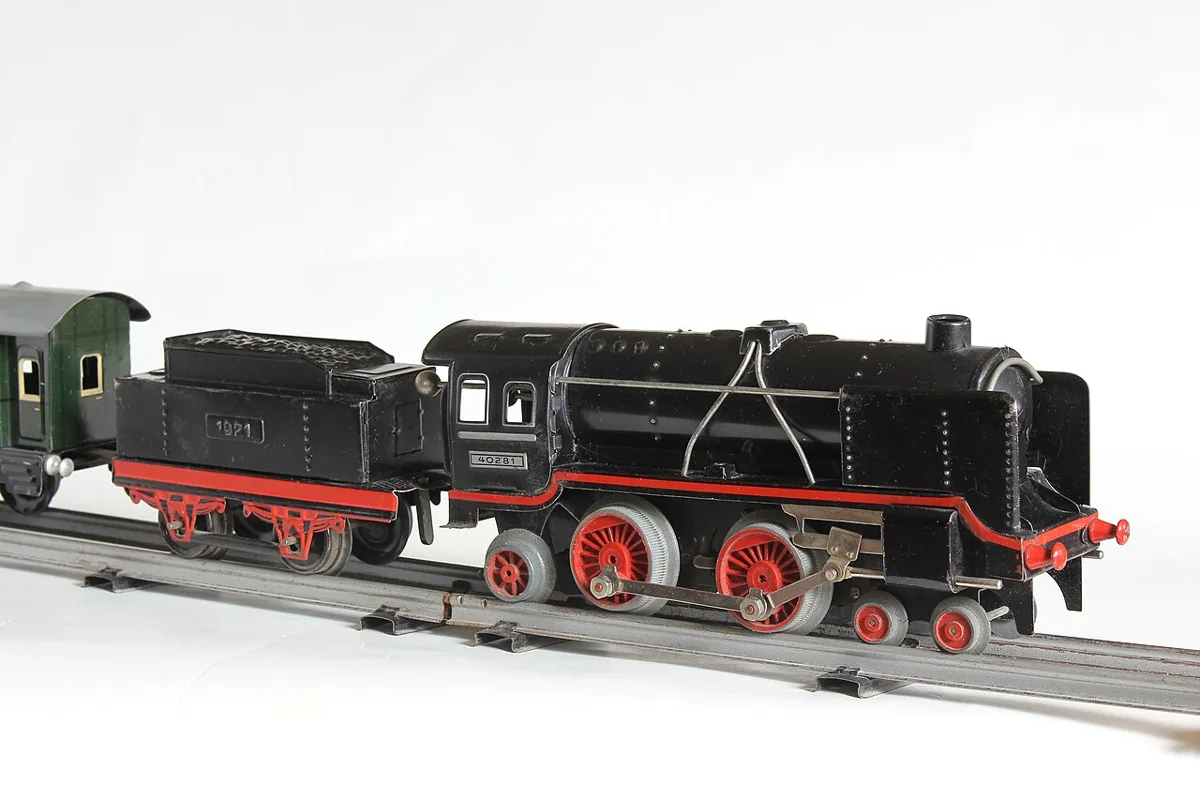
A familiar paint scheme can suggest a period without establishing the date of an entire railway scene. Vehicles survive alterations, buildings remain in use and photographs can be reproduced long after they were taken. A convincing modelled period therefore depends on several pieces of evidence, with a clear distinction between what is dated, what is inferred and what is a deliberate approximation.
The NMRA rolling-stock guide connects equipment choice with era and location. Its weathering guide distinguishes generic effects from attempts to reproduce a particular photographed subject. The Library of Congress adds guidance for caring for paper reference material. Together these sources support a research practice that preserves evidence rather than relying on a single attractive image.
Define the dating question
Write a specific question such as whether a chosen vehicle version and station arrangement could belong in the same proposed scene. A whole decade may be too broad if a visible change occurred during it. Conversely, choosing a precise day without supporting records creates an unnecessary claim.
State the intended degree of fidelity. A fictional railway inspired by a period can use a different evidence standard from a reconstruction of a named location. Neither should borrow certainty from the other. Describe the scene honestly so a visual preference is not mistaken for a documented historical combination.
Give every source its own date fields
For a photograph, record the date of the depicted scene when established, the date attributed by the catalogue and the date of digital reproduction or upload. These are different events. Preserve the original caption and identifier so later research can revisit the attribution.
For a drawing, identify its title, revision and what the revision applies to. A dated drawing can describe a proposal rather than a completed alteration. Do not turn the existence of a plan into proof that every detail was built. Keep the source's actual description alongside your interpretation of its relevance to the model.
Build a feature timeline
List the features important to the scene: a vehicle variation, station building, signalling appearance or other visible element you can research responsibly. Beside each, record the supported date range, source and confidence. Leave unknown endpoints open rather than supplying convenient dates from general memory.
The useful question is where the supported ranges overlap. If one feature is documented in a certain period and another only in a later arrangement, the combination needs investigation. A neat timeline does not resolve conflicting evidence automatically. It exposes the conflict so you can seek another source, revise the scene or acknowledge a modelling compromise.
Use photographs within their limits
A dated photograph can show that a visible combination existed at that recorded moment, subject to the reliability of the attribution. It does not necessarily establish when the combination began or ended. The absence of a detail from a particular view may mean it was hidden rather than not present.
Compare independent views and records where a specific conclusion matters. Do not treat several reposts of the same photograph as separate corroboration. Preserve the original source trail, and avoid enlarging an uncertain mark into a confident identification. An unresolved note is often the most accurate outcome of a limited image.
Separate age from appearance
Weathering can help communicate use, but it is not a reliable calendar by itself. The NMRA weathering guide's distinction between generic and subject-specific approaches is useful here. A plausible dusty finish and a documented surface condition are different claims.
If reproducing a particular photographed vehicle, connect the finish with that image and its date evidence. If creating a general impression, describe it as an interpretation. Do not assume that a clean vehicle is newly built or that a heavily marked one belongs to an earlier era. Appearance has context that a single modelling treatment cannot establish on its own.
Care for the working archive
Keep paper references in suitable conditions and handle them carefully, following the Library of Congress guidance applicable to their format. Do not mark an original photograph or fragile document merely to organise a modelling project. Put your notes on a separate record linked by an identifier.
Digital working copies can support comparison, but preserve the source link, credit and reuse conditions. Access for research does not automatically permit publishing an image on a website or exhibition panel. The timeline should therefore include a rights reference as well as a historical one when a source may become part of a public presentation.
Publish the modelling decision honestly
Finish with a short statement explaining the chosen period, the strongest evidence and any visible compromise. Identify which features remain provisional. If a later source changes the conclusion, retain the earlier interpretation with a dated correction rather than rewriting the research trail to appear certain from the start.
A well-supported scene does not need every detail resolved. It needs a consistent relationship between the claim being made and the evidence available. Dating through several documented features produces a more useful model history than allowing one paint scheme to stand in for the whole railway's past.
Take it to the workbench
A field sheet for this article. Use your browser’s print command or copy the headings into your project notebook. Keep facts, observations and open questions distinct.
| Specific dating question | Your notes |
|---|---|
| Scene date versus upload date | Your notes |
| Feature and supported range | Your notes |
| Conflicting evidence | Your notes |
| Deliberate modelling compromise | Your notes |
Overlap is a question
Hypothetical worked example. Fictional evidence places building form A in 1950 and vehicle form B in 1955. These isolated observations do not establish that both coexisted in either year. Seek date ranges or another view before declaring the scene historically matched.
This is an editorial exercise, not a report of a physical test.
Sources & further reading
- National Model Railroad Association — Motive Power & Rolling Stock
- National Model Railroad Association — Weathering
- Library of Congress — Care, Handling, and Storage of Works on Paper
Sources support the factual background. Worksheets and hypothetical exercises are editorial proposals, not reports of tests performed by this publication. Consult the relevant current product documentation before applying product-specific advice.