How to read a model railway standard
Find the applicable document and distinguish advice from requirements. A document-reading checklist with version and scope fields.
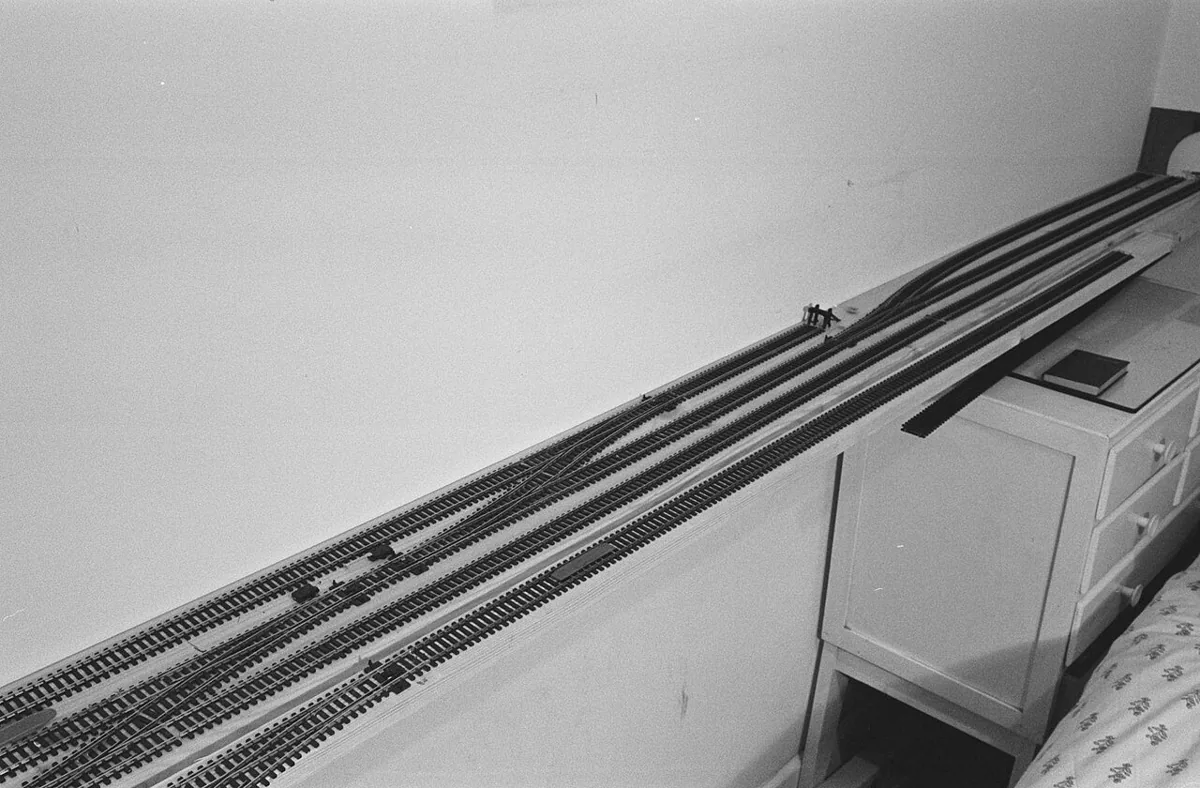
A search for a model railway dimension can produce a diagram, a forum answer and several documents with similar numbers. Selecting the first plausible value is tempting. The safer reading task is to establish what the document governs, which version you have, and whether its dimensions apply to the models or interface you are actually considering.
The NMRA's technical index distinguishes Standards, Recommended Practices, Technical Notes, Technical Information and Technical References. Its glossary explains terminology, while the track guide shows how real products can include additional connection details. A standard is therefore part of an evidence chain, not a substitute for identifying the product and the problem.
Write the question first
State the decision in ordinary language. “Will these wheels suit this track arrangement?” is more precise than “What is the right dimension?” A coupling question, a clearance question and a track-gauge question may concern the same vehicle but lead to different documents.
Add the scale, relevant gauge, product reference and intended use. If any is unknown, preserve the gap. A document can be authoritative within its scope while being inapplicable to your situation. The reading process should reduce that uncertainty rather than disguise it beneath a formal-looking diagram.
Identify the document family
The NMRA explains that its Standards establish correlated limiting dimensions and parameters for interchange. Recommended Practices provide additional guidance where the subject or permitted variation differs. Technical Notes supplement standards, while other document classes have their own purposes. Read the organisation's definitions instead of assuming that every file in the index carries identical authority.
This distinction matters when someone presents a recommendation as an absolute rule, or dismisses it as irrelevant merely because it is not named a Standard. Record the document category and its own stated role. Do not turn the terminology into a legal assertion: the NMRA explicitly separates its model railway technical documents from legal requirements.
Check the version and scope
Open the document itself and note its identifier, title, edition or revision date and units. Check whether the index lists a later revision. A screenshot detached from those details can preserve a diagram while losing the information needed to interpret it correctly.
Read the scope and notes before copying values. Look for separate treatments of standard, fine or other modelling practices. Determine whether a table concerns straight track, curves, a particular scale group or a specific interface. If a note qualifies the number you intended to use, retain the note beside the number in your working record.
Read the diagram as a measurement instruction
Identify the exact surfaces or points between which a dimension is taken. Similar-looking distances can mean different things: across rails, between wheel faces or from a reference surface. Check whether a figure describes a minimum, maximum, nominal value or an allowed range.
Use tools suitable for the measurement and follow their instructions. A ruler placed approximately beside a model is not evidence that a small tolerance has been met. If the method is unclear, ask a knowledgeable practitioner or consult the relevant technical explanation before changing the model. The purpose of reading carefully is to prevent an uncertain interpretation becoming a permanent adjustment.
Connect the document to the product
Product instructions can introduce requirements not settled by a general standard. The NMRA track guide notes that integrated-roadbed systems can use proprietary mechanical connectors. Matching a general rail or gauge description does not make those connectors identical.
Record the product documentation alongside the technical reference. If the two appear to conflict, do not invent a compromise dimension. Verify that the documents concern the same product, edition and use. Contacting the manufacturer or an appropriate specialist may be necessary. A clearly stated unresolved compatibility question is a better result than a confident answer assembled from unrelated evidence.
Keep a usable citation card
Your card should contain the decision, document identifier, edition, source URL, access date, relevant figure or table, units and the interpretation you intend to apply. Add any product instruction that constrains the decision. Keep your own measurements separate from quoted document values.
Finish with an explicit status: applicable and understood, more information needed, or outside the document's scope. This is more useful than simply saving a PDF named standards. When a later component changes, the card shows which assumption requires review. Careful standards reading does not mean collecting the most documents; it means connecting the right evidence to a clearly defined model railway question.
If you share an extract with a club member, include its identifier, edition and the notes necessary for interpretation. Preserve the original source link and check the publisher's reproduction conditions before redistributing drawings. A cropped image can travel much farther than the explanation beside it. Keeping the scope attached prevents a useful technical reference from becoming a misleading universal instruction in someone else's project notes.
Take it to the workbench
A field sheet for this article. Use your browser’s print command or copy the headings into your project notebook. Keep facts, observations and open questions distinct.
| Decision to resolve | Your notes |
|---|---|
| Document identifier and edition | Your notes |
| Applicable scope | Your notes |
| Figure, units and qualifiers | Your notes |
| Product instructions or conflict | Your notes |
An unresolved citation card
Hypothetical worked example. The card names a wheel question but contains only a trackwork screenshot with no edition. Status stays unresolved. Find the applicable wheel document, record its revision and diagram references, and retain the model instructions before deciding whether an adjustment is justified.
This is an editorial exercise, not a report of a physical test.
Sources & further reading
- National Model Railroad Association — Standards and Recommended Practices
- National Model Railroad Association — Beginner's Glossary
- National Model Railroad Association — Laying Track
Sources support the factual background. Worksheets and hypothetical exercises are editorial proposals, not reports of tests performed by this publication. Consult the relevant current product documentation before applying product-specific advice.