Scale and gauge answer different questions
Read the two measures without confusing them. Worked dimension examples and a compatibility note card.
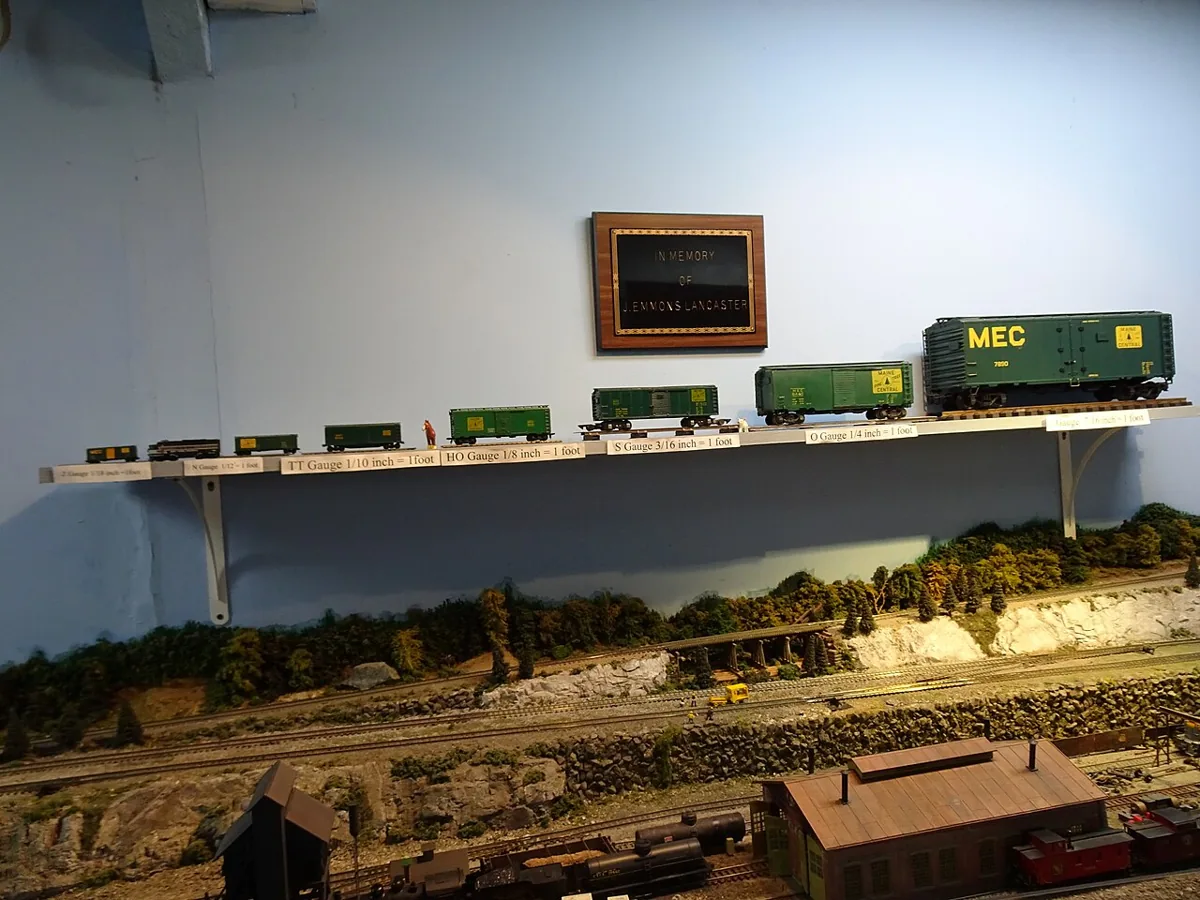
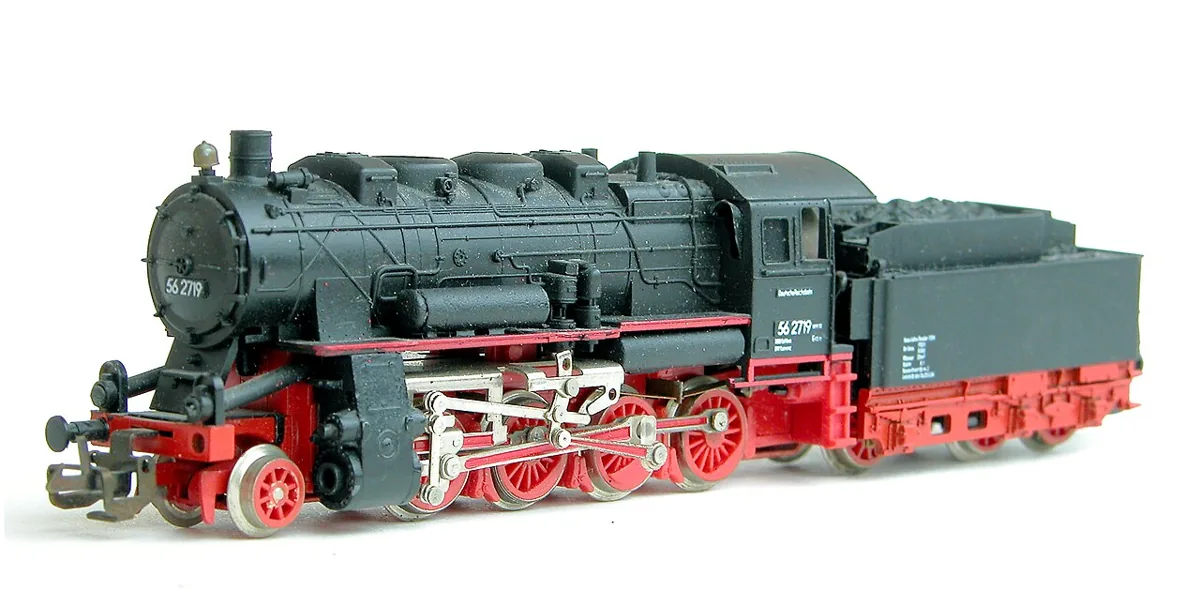
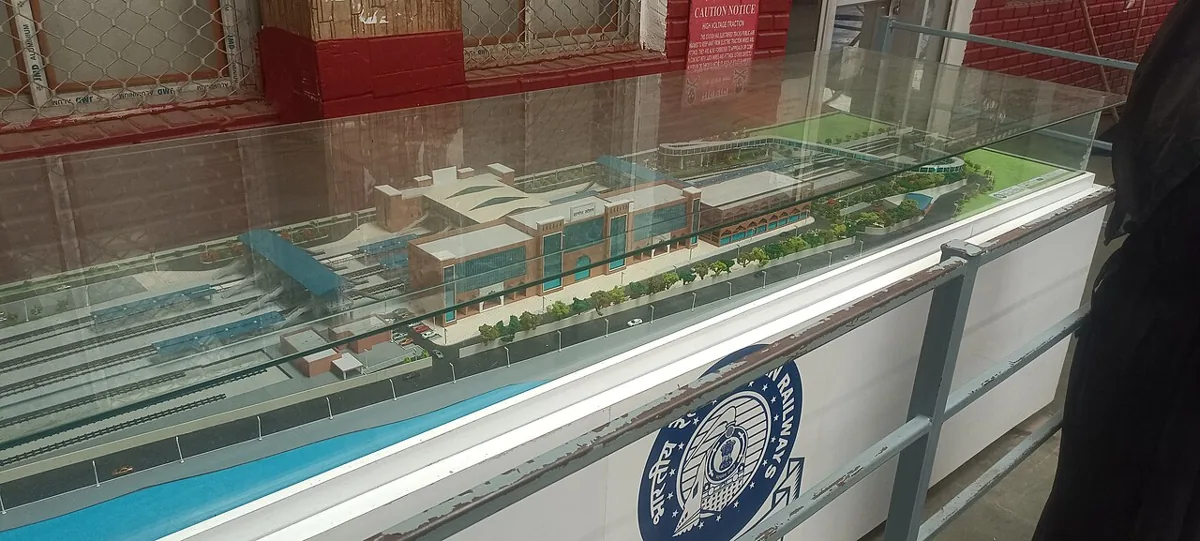
A model railway has two different kinds of size. One describes how much smaller a vehicle or building is than its real counterpart. The other describes the distance between the rails. Confusing them can lead to a station that looks wrong beside a train, or a vehicle that looks plausible but does not belong on the chosen track. Treat them as separate entries from the beginning.
The distinction appears in the NMRA's introductory material and glossary, and in MOROP's NEM 010 terminology. Their conventions also show why a familiar letter on a box should lead to a more precise description, rather than ending the compatibility check.
Scale describes a relationship
Written as a ratio, scale compares a model dimension with the corresponding full-size dimension. At one to one hundred, a ten-metre object becomes one tenth of a metre long. All units must match before division: ten metres is ten thousand millimetres, and dividing that by one hundred gives one hundred millimetres.
That deliberately simple example describes arithmetic, not a named railway modelling standard. It works for a wall, a platform sign or a vehicle body whenever the starting measurement and chosen ratio are known. Record where the real dimension came from. A neat calculation cannot repair an uncertain photograph measurement or a drawing whose reproduction size has changed.
Gauge describes the track
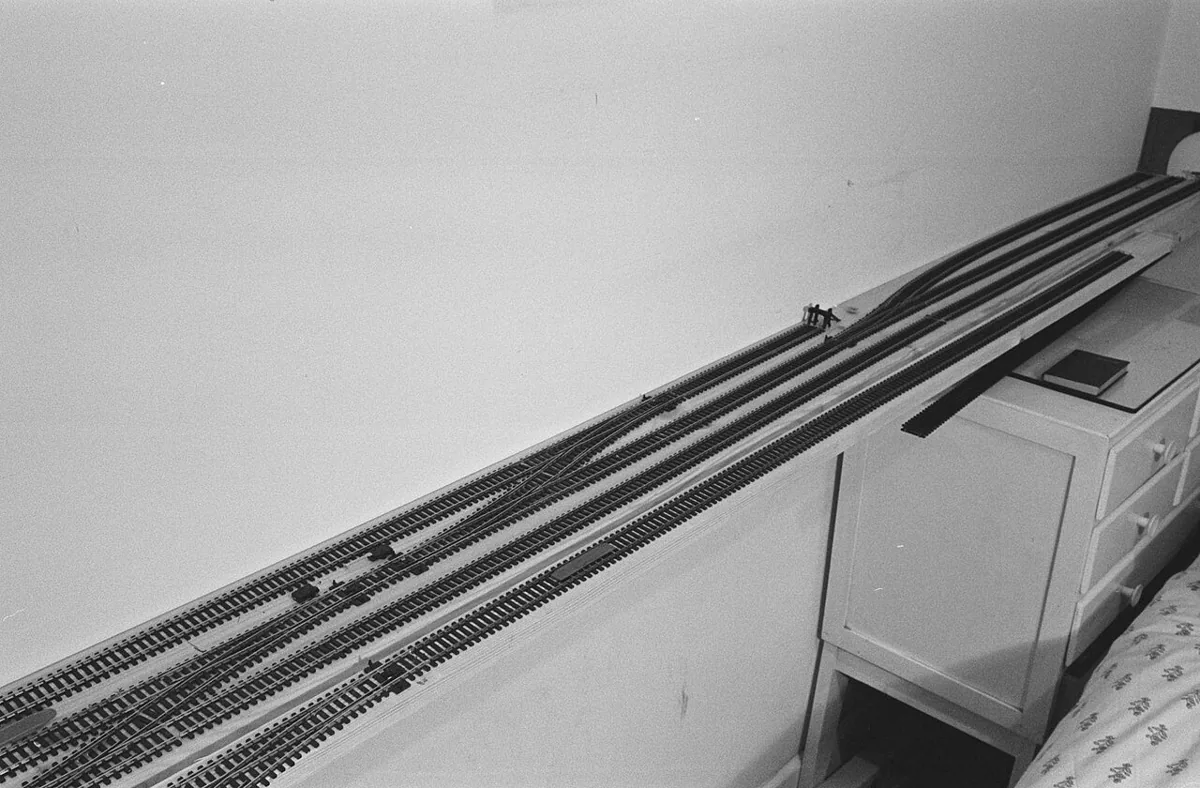
Track gauge is the distance between the relevant inner faces of the rails. It is a physical measurement, not a reduction ratio. MOROP's English NEM 010 edition gives an example of standard-gauge railway modelling at one to eighty-seven, designated H0, using sixteen and a half millimetre track gauge. Those are two related specifications, expressed in different ways.
Do not measure across the outside of the rails and call that gauge. Do not assume that rail height is included in the term either. Rail height, wheel dimensions and the space around the moving vehicle are additional questions. Gauge is indispensable, but it does not describe the entire track-and-vehicle relationship.
Narrow gauge does not mean smaller scenery
A narrow-gauge model depicts a railway with a narrower prototype track gauge. It need not use a smaller reduction ratio for its people, buildings or scenery. Within one chosen scale, a standard-gauge line and a narrow-gauge line can share appropriately sized figures while using different track gauges.
NEM 010 illustrates this separation through nominal-size designations and additional letters for gauge groups. Those conventions belong to the system described in that document. Labels used in other regions or by particular manufacturers need their own explanation. A narrow-looking track in a photograph is therefore insufficient evidence for identifying the scale of the surrounding scene.
One track gauge can support different ideas
If two models use the same track gauge, their bodies are not necessarily modelled to the same ratio. The NMRA's introduction discusses multiple scales and narrow-gauge subsets; MOROP separately records scale and gauge. Read those distinctions as a warning against treating track width as a complete description of size.
For a mixed collection, put a model building or figure beside each vehicle before planning a shared scene. Look for differences in door height and the implied size of people. This is a visual consistency check, not a dimensional certification. If the collection is deliberately playful, a mixture may be entirely appropriate; simply describe that choice honestly instead of claiming strict scale consistency.
Make a two-part identity card
Give each model or track system a small record with separate fields for stated scale, stated track gauge, source of the specification and any unresolved ambiguity. Add the exact product reference. Preserve the manufacturer's wording alongside your interpretation, especially where a trade label covers a range of products or historical conventions.
Now add a third group of fields for actual operating requirements: coupling arrangement, relevant wheel-and-track standard, minimum curve information and control-system documentation. Leave unknown entries visibly unanswered. The purpose is to keep a missing specification from quietly becoming an assumption. A card with an honest gap is more useful than a confident “compatible” written without evidence.
Check a proposed purchase in stages
First compare the stated reduction ratio with the scene you are building. Next compare the gauge with the track. Then investigate the other mechanical and control requirements using the current product documentation and applicable standards. The NMRA publishes separate technical document categories because interchange involves more than a single measurement.
For an unpowered display, some operating questions may be irrelevant, while visual dimensions still matter. For a working railway, matching scale and gauge is only the start. Keeping these decisions separate gives you a clear way to explain why a model belongs in a collection, fits a scene, or still needs investigation before it can join an operating train.
Keep packaging and specification references with the card. If a later owner changes wheels or couplings, record that change separately from the original description. Otherwise a correct label on an old box can become a misleading description of the model inside it.
Take it to the workbench
A field sheet for this article. Use your browser’s print command or copy the headings into your project notebook. Keep facts, observations and open questions distinct.
| Stated reduction ratio | Your notes |
|---|---|
| Stated track gauge | Your notes |
| Specification source | Your notes |
| Exact product reference | Your notes |
| Other operating requirements | Your notes |
Separate two labels
Hypothetical worked example. Two boxes state the same track gauge but different reduction ratios. Gauge is a possible track match, not proof that the bodies look consistent or the couplings work together. Keep the ratio, gauge and operating checks as separate decisions.
This is an editorial exercise, not a report of a physical test.
Sources & further reading
- National Model Railroad Association — Getting Started
- National Model Railroad Association — Beginner's Glossary
- National Model Railroad Association — Standards and Recommended Practices
- MOROP — NEM 010: Scales, Nominal Sizes, Gauges — English edition 2011
Sources support the factual background. Worksheets and hypothetical exercises are editorial proposals, not reports of tests performed by this publication. Consult the relevant current product documentation before applying product-specific advice.