Track code is a height, not a scale
Understand rail code when combining track. A junction checklist separating rail height from gauge and wheel fit.
Two pieces of track can share a gauge while differing in rail height. They can also share a rail code while using different bases or connectors. These are separate properties, and treating code as a complete compatibility label can create an awkward joint or a misleading purchase decision. Read it as one measurement within a larger track description.
The NMRA glossary defines rail code in thousandths of an inch. Its track guide discusses joining systems and alignment, while the technical index separates trackwork and wheel standards. Those sources support a useful distinction between the visible height of a rail, the shape of the whole track product and its suitability for particular equipment.
Decode the number
Under the convention described by the NMRA, code one hundred represents a nominal rail height of zero point one hundred inch. Multiplying by twenty-five point four millimetres per inch gives two point five four millimetres. This arithmetic explains the label; it is not a measurement certificate for any individual rail sample.
Code does not tell you the distance between rails, the scale of the surrounding buildings or the height of the complete track above the baseboard. Keep those fields separate in your notes. A short product description may include several numbers, and each should be linked to the property it actually describes before you compare alternatives.
Describe the whole track section
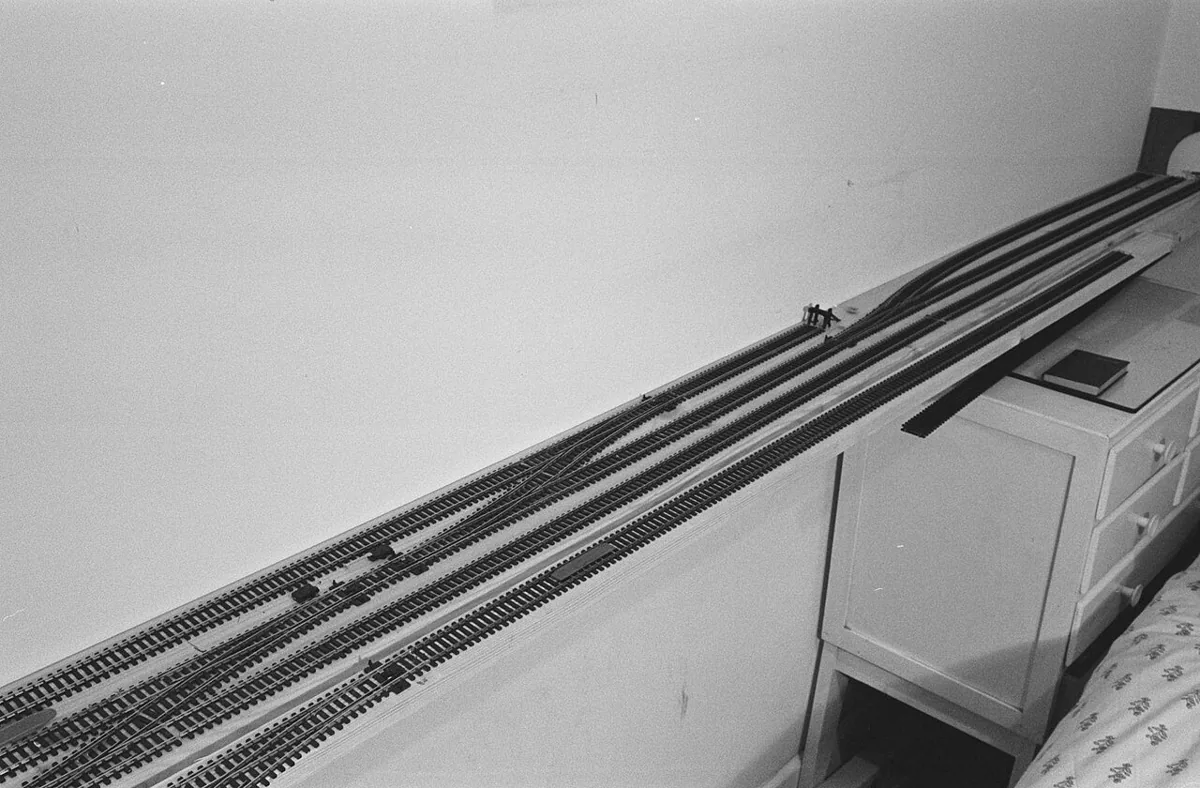
Record the manufacturer, range, product reference, gauge, rail code, sleeper or tie arrangement, and any integrated roadbed. Note whether the track is sectional or flexible. Photograph the underside and connection ends where that helps identify a loose piece whose packaging is missing.
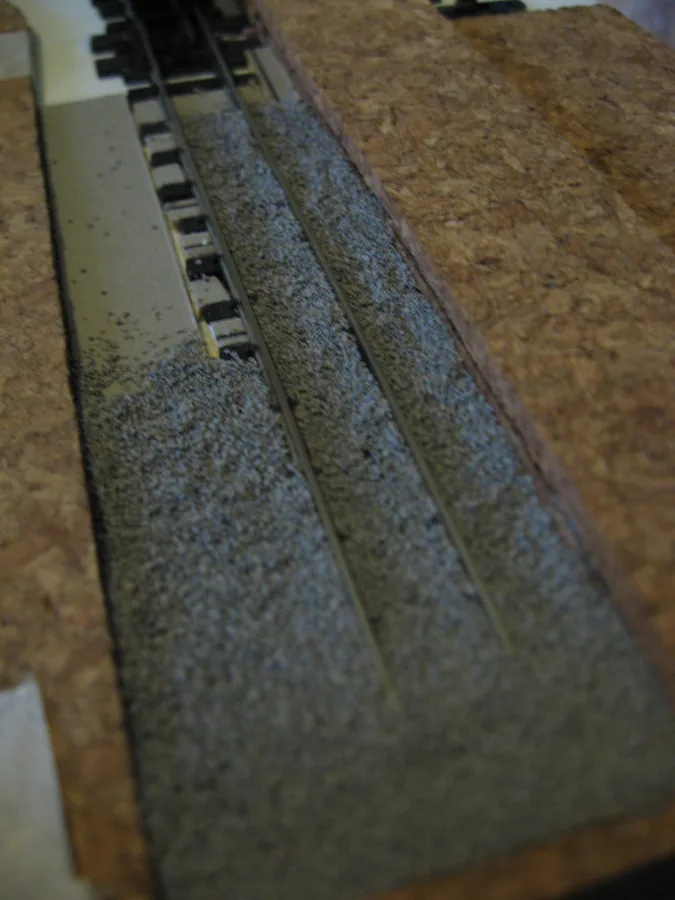
The NMRA track guide notes that integrated-roadbed systems can have proprietary mechanical connections. Two products that use a similar rail can therefore present different problems at their bases. A connector that appears close in a photograph is not evidence of interchangeability. Consult the current product instructions or a documented transition arrangement before planning a mixed-system joint.
Compare top surfaces at the joint
The running surface needs an appropriate transition between adjoining sections. Simply placing two different-height track products on the same board can leave an unwanted step, even when the rails themselves have the same code. Conversely, different rail codes may be joined through an appropriate designed transition.
Make a joint record identifying both complete track products and the proposed connection method. Include the base support and the exact transition component where one is used. Avoid suggesting that any improvised packing or bent joiner is universally suitable. The method must fit the actual rails and the construction beneath them, not merely satisfy the arithmetic difference between two code numbers.
Check alignment in more than one direction
A joint can be vertically level while still containing a horizontal kink. It can also appear aligned while one rail has not entered its joiner correctly. The NMRA guide emphasises smooth connections and secure rail joints because poor alignment can affect running.
Inspect the joint from suitable viewpoints and follow the chosen track system's assembly instructions. Keep any mechanical and electrical requirements distinct in the record. This article does not establish a wiring procedure or recommend modifying electrical isolation. If the intended joint affects a control arrangement, use the relevant documentation and appropriate expertise before making changes.
Bring wheels into the question
Rail height alone cannot establish wheel compatibility. Wheel profiles, track dimensions and the details of turnouts can all matter within a particular modelling system. The NMRA technical index provides separate trackwork and wheel document categories, illustrating why one label does not settle every part of the relationship.
If you are mixing older equipment with a different track range, identify the models and applicable requirements rather than relying on a general age rule. Record what is documented and what needs checking. A vehicle running along an isolated straight piece does not demonstrate that it will pass every turnout or transition on the finished railway.
Use a purchase and installation card
Your card should name both the track product and its intended neighbours, then list gauge, rail code, complete support height, connector arrangement and relevant equipment assumptions. Add a source for each specification. Keep a provisional compatibility conclusion separate from the values themselves so uncertainty remains visible.
Before permanent installation, assess the actual arrangement with the intended equipment and record the scope of that assessment. The useful result is a track joint whose geometry and connection are understood. Knowing what code means helps you ask better questions, but it is the complete product and operating context that turns the label into a sound construction decision.
Keep a labelled offcut or packaging reference for each track range used. If a later repair needs a replacement section, this small archive avoids identifying the product by colour or apparent similarity. Record substitutions at the relevant location so the documentation continues to describe the installed railway.
Take it to the workbench
A field sheet for this article. Use your browser’s print command or copy the headings into your project notebook. Keep facts, observations and open questions distinct.
| Complete track product | Your notes |
|---|---|
| Gauge and rail code | Your notes |
| Support height | Your notes |
| Joining method and source | Your notes |
| Wheel and route assumptions | Your notes |
Two matching rail codes
Hypothetical worked example. Both products are labelled code 100, but one includes a taller moulded base and a different connector. Their nominal rails have the same height; their complete track sections do not. The joint remains unresolved until a documented transition covers the whole arrangement.
This is an editorial exercise, not a report of a physical test.
Sources & further reading
- National Model Railroad Association — Laying Track
- National Model Railroad Association — Standards and Recommended Practices
- National Model Railroad Association — Beginner's Glossary
Sources support the factual background. Worksheets and hypothetical exercises are editorial proposals, not reports of tests performed by this publication. Consult the relevant current product documentation before applying product-specific advice.