A wheel check before a track rebuild
Triage vehicle-specific derailments without prescribing blind adjustments. A location-and-vehicle fault matrix.
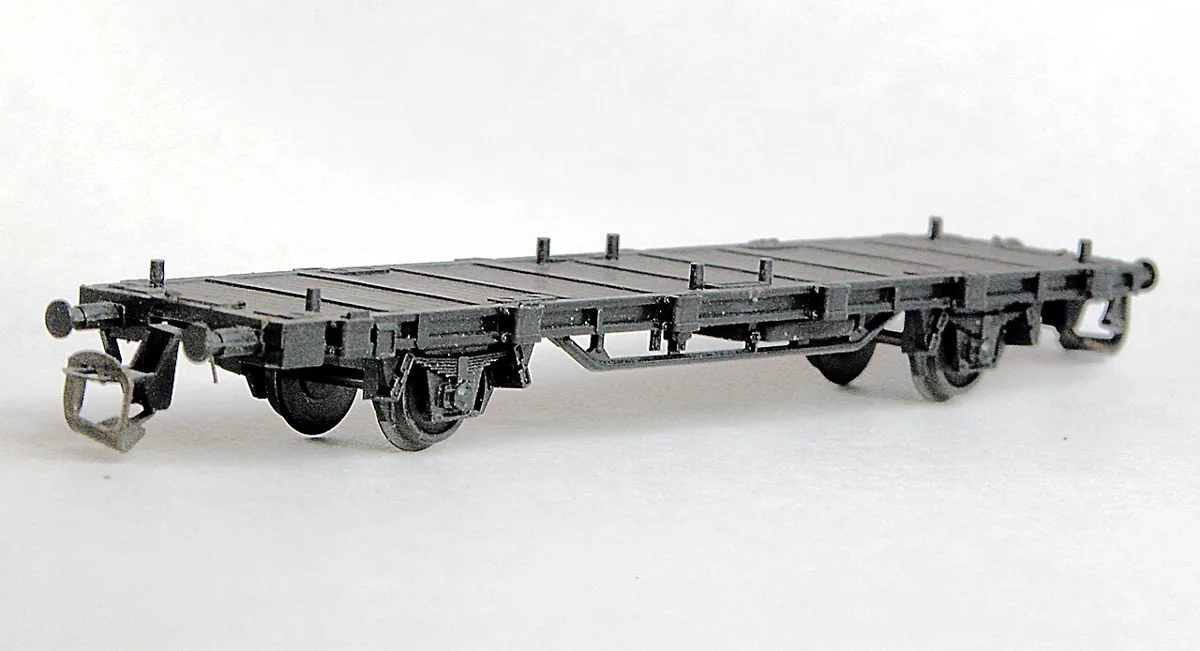
A car derails at a turnout, and the temptation is to rebuild the turnout. Sometimes the track is the problem. Sometimes one vehicle reveals an issue that the rest of the collection does not. Before changing either, identify whether the symptom follows a place, a vehicle or a particular combination. That distinction can prevent a large intervention based on a small amount of evidence.
The NMRA rolling-stock guide discusses wheel gauge and coupling height as checks relevant to operating problems. Its track guide describes joint alignment and curve-related difficulties. The technical index adds the applicable standards context. The method here organises observations; it does not prescribe blind wheel adjustments or establish that every derailment has the same cause.
Preserve the initial observation
Write down the exact location, vehicle identity, direction of travel and movement being attempted. Note whether the vehicle was alone or coupled to others. Describe what was actually seen: a leading wheel climbing, a coupling catching or a body contacting scenery. If the first visible event was missed, say so.
Avoid beginning the record with a diagnosis. “Bad turnout” is an interpretation; “the front wheel left the rail while taking the diverging route” is an observation. A photograph or careful video can help clarify the sequence, but do not repeatedly run equipment into a damaging failure merely to obtain a more dramatic record.
Make a location-and-vehicle matrix
Draw locations across the top of a sheet and the relevant vehicles down the side. Record only movements that were actually observed under suitable conditions. Use separate marks for no symptom observed, symptom observed and not checked. An empty cell should not quietly become a successful result.
For a fictional example, car A repeatedly encounters difficulty at one location while car B does not. That pattern justifies closer attention to car A and its interaction with that track. It does not prove the track is perfect. If several vehicles encounter the same problem, the evidence points towards a shared condition worth investigating without excluding vehicle differences.
Inspect the vehicle without forcing it
Look for an obvious obstruction, loose part or damaged detail before attempting adjustment. Check that the vehicle can be handled according to its instructions. Models with delicate rods, pickups or attached details can require different support and servicing methods.
The NMRA guide discusses using a standards gauge appropriate to the selected scale. Follow the tool's instructions and the relevant current technical information so the measurement concerns the intended wheel surfaces. Do not substitute an approximate visual impression for a small dimensional check. If you cannot interpret the tool or access the wheel safely, seek knowledgeable assistance rather than twisting parts experimentally.
Keep wheel, coupling and body issues separate
A wheel measurement may be satisfactory while a coupling or body feature still causes trouble. The rolling-stock guide also discusses coupling height, and the track guide explains why reverse curves can create difficult coupled relationships. These are distinct lines of investigation.
Record each observation in its own field. Note whether contact occurs with another vehicle, the track or nearby scenery. A car that moves freely alone but struggles while coupled requires a different explanation from one with a visibly obstructed wheel. Keeping the categories separate makes the eventual repair proportionate to the actual evidence instead of turning every symptom into a wheel-spacing problem.
Inspect the corresponding track
At the problem location, examine joins, visible alignment and the intended geometry. The NMRA track guide stresses smooth joints and correctly seated rail joiners. Consider whether the route includes a direction change or transition that differs from the straightforward track used for an earlier check.
Compare the installed track with its product requirements and applicable standards. Do not change wheel dimensions to compensate for an unidentified track defect, or modify a turnout merely because a single vehicle appears suspicious. Where the evidence remains mixed, preserve that uncertainty and narrow the next check rather than making several changes at once.
Verify a specific repair
Once an appropriate documented correction has been made, repeat the relevant observations and record exactly what changed. A modest verification should include the original movement and other affected movements, using the same identified equipment where possible. Keep before-and-after notes so improvement can be connected with the intervention.
Do not conclude that the whole layout or fleet is now verified. The record concerns a named symptom under named conditions. If the problem persists, the matrix still helps by showing which possibilities have evidence and which remain open. A careful wheel check is valuable because it belongs to a structured diagnosis, not because it offers a universal shortcut around track planning, product instructions or specialist repair.
If professional repair is needed, provide the matrix and exact model identification. Specific observations about direction, location and coupled configuration are more actionable than a general complaint that the vehicle runs badly.
Take it to the workbench
A field sheet for this article. Use your browser’s print command or copy the headings into your project notebook. Keep facts, observations and open questions distinct.
| Vehicle and location | Your notes |
|---|---|
| Direction and coupled state | Your notes |
| First observed event | Your notes |
| Appropriate gauge or instruction | Your notes |
| Correction and bounded recheck | Your notes |
Read an incomplete matrix
Hypothetical worked example. Car A shows the symptom at turnout T; car B passes T in one direction only. Record A/T as observed failure, B/T as limited observation, and the reverse direction as not checked. This evidence narrows investigation without proving that either the turnout or car is solely responsible.
This is an editorial exercise, not a report of a physical test.
Sources & further reading
- National Model Railroad Association — Motive Power & Rolling Stock
- National Model Railroad Association — Laying Track
- National Model Railroad Association — Standards and Recommended Practices
Sources support the factual background. Worksheets and hypothetical exercises are editorial proposals, not reports of tests performed by this publication. Consult the relevant current product documentation before applying product-specific advice.